A HOME RECONNECTED
Two-Storey Extension on a Sloping Site
From an unsafe balcony to two connected living levels, with a new kitchen, a lower-level retreat and a rear deck.
Built in Beecroft · Sydney
Connected from within
Bushfire-prone site
A sideways-sloping block
THE TRANSFORMATION
From an unsafe balcony to two connected living levels
Beecroft · Two-storey rear extension · Sloping site · BAL-40
An unsafe concrete balcony and an isolated room beneath the house were holding this home back. Elite Additions replaced the rear balcony with a two-storey extension, opened up the kitchen, dining and living areas, and connected a new lower-level retreat to the existing house.
The build combined rock excavation, retaining work and bushfire construction requirements with a new Shaker-style kitchen, spacious bathroom and laundry, home office and rear deck. Elite also developed the construction documentation and coordinated the construction certificate process after taking over from the original building designer.
STEP INSIDE
See how the spaces come together
Explore the kitchen, living spaces and lower level in the project video.
01 / THE STARTING POINT
The brief: make the rear of the home usable again
The original concrete balcony at the back of the house had deteriorated to the point that it was unsafe. The rear door had been secured shut to prevent access. Beneath the existing house, a small room with a concrete floor could only be reached from outside. It was mainly used for storage.
The project needed to do more than add floor area. It needed to replace the unsafe balcony, improve the connection between levels and create practical spaces that the owners could use every day.
Developing the drawings and coordinating approvals
The owners already had council-approved plans prepared by a building designer. Before construction could proceed, those drawings needed further detail and coordination.
Elite Additions took over this stage, amended and developed the drawings, coordinated the engineer and supporting documents, and managed the construction certificate process before building the extension. This joined the documentation and construction stages together, with the site conditions and proposed building work considered throughout.
02 / MAKING THE SITE WORK
Building across a sideways slope
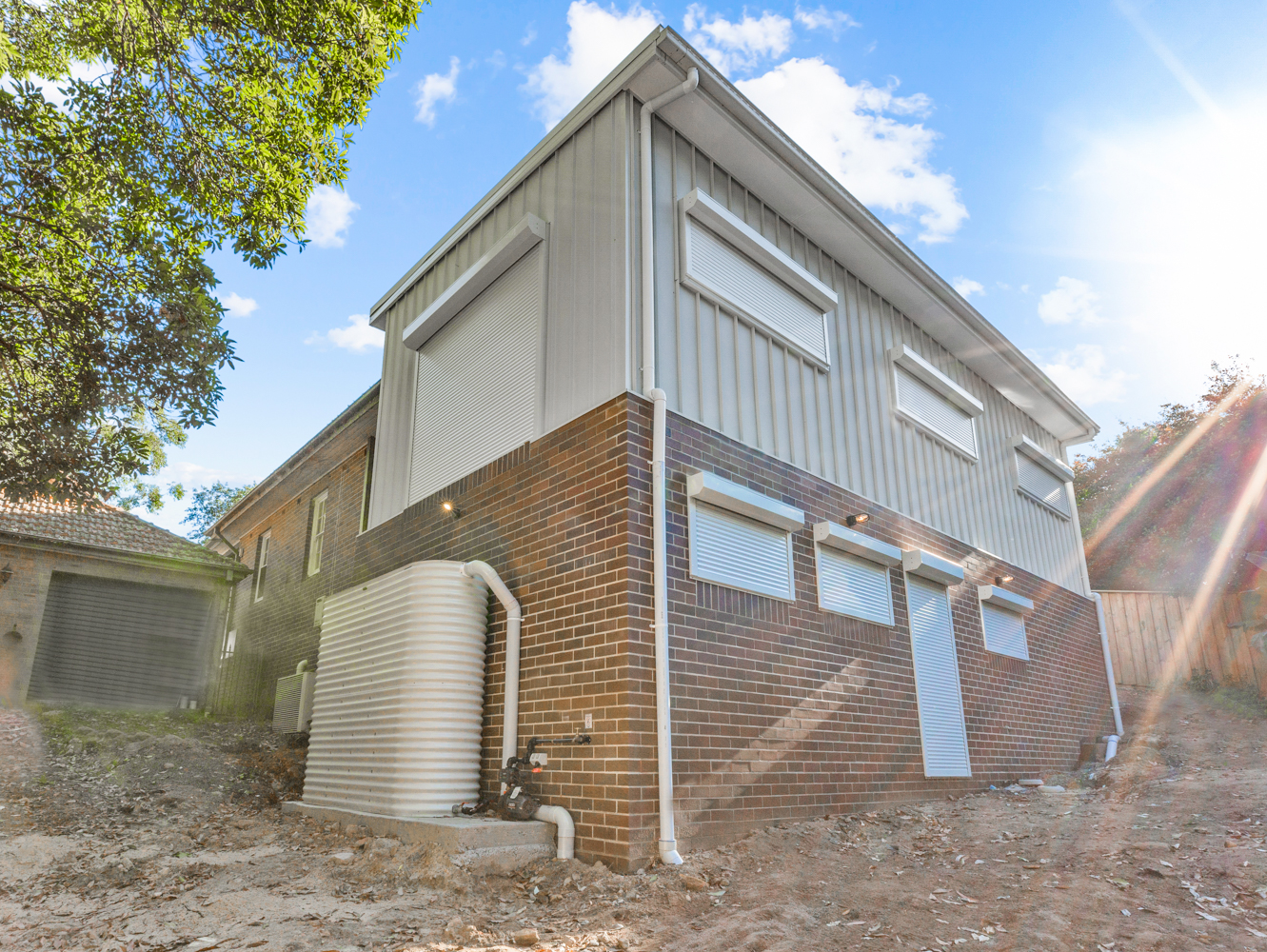
The block sloped from side to side, creating different ground levels across the width of the extension. Retaining work along one side formed part of the support arrangement for the new two-storey addition.
Access was organised through a side laneway. A section of fence was removed to bring excavators, skip bins and materials to the rear of the property. This access needed to be planned alongside demolition, excavation and the sequence of construction.
Working through rock, footings and drainage
Excavation uncovered rock that had not been apparent at the outset. Rock breaking was needed for parts of the sewer and plumbing routes and to prepare areas for the slab. The additional excavation became a variation to the work.
As the ground fell across the site, the construction moved through a combination of retained ground, rock and supporting brickwork beneath the slab. Footings extended further down on the lower side. These changing conditions required the retaining, footing and slab details to be coordinated as the ground was exposed.
The slope also made water management an important part of the build. Ground levels, drainage and waterproofing needed careful attention throughout the below-house works. Allowances for demolition and excavation helped account for conditions that could not be fully understood before work began.
03 / CONNECTING DAILY LIFE
A connected lower level with room to retreat
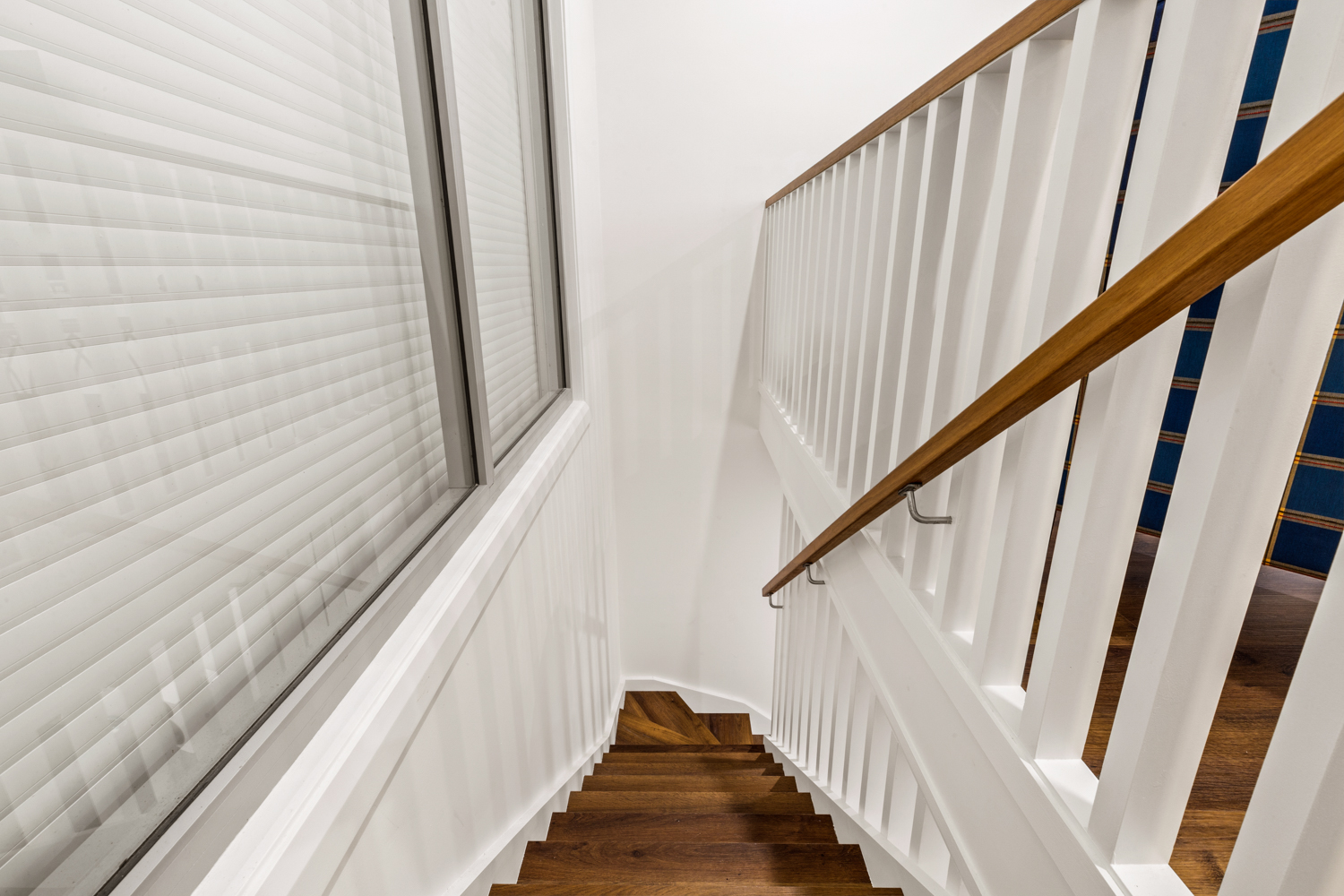
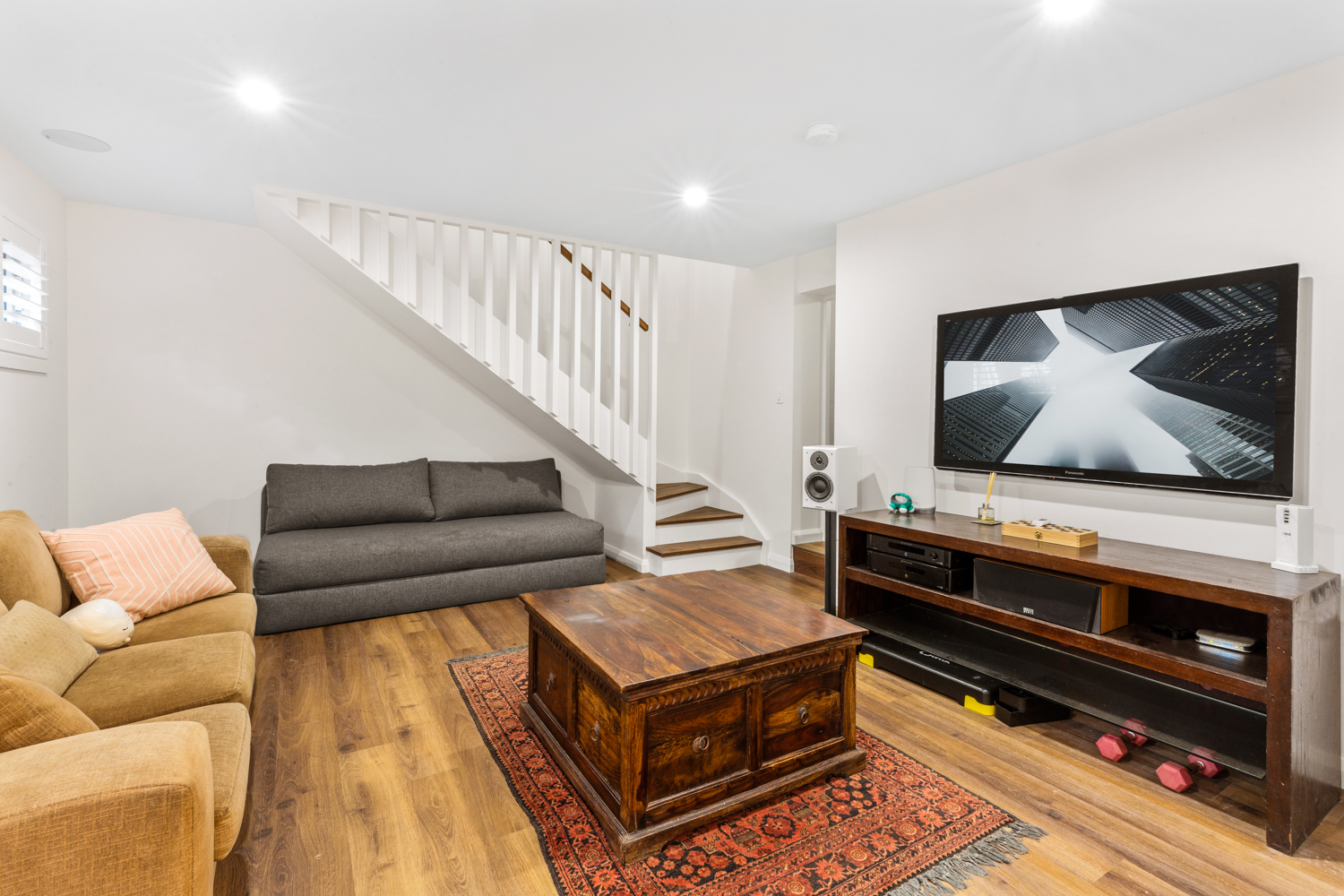
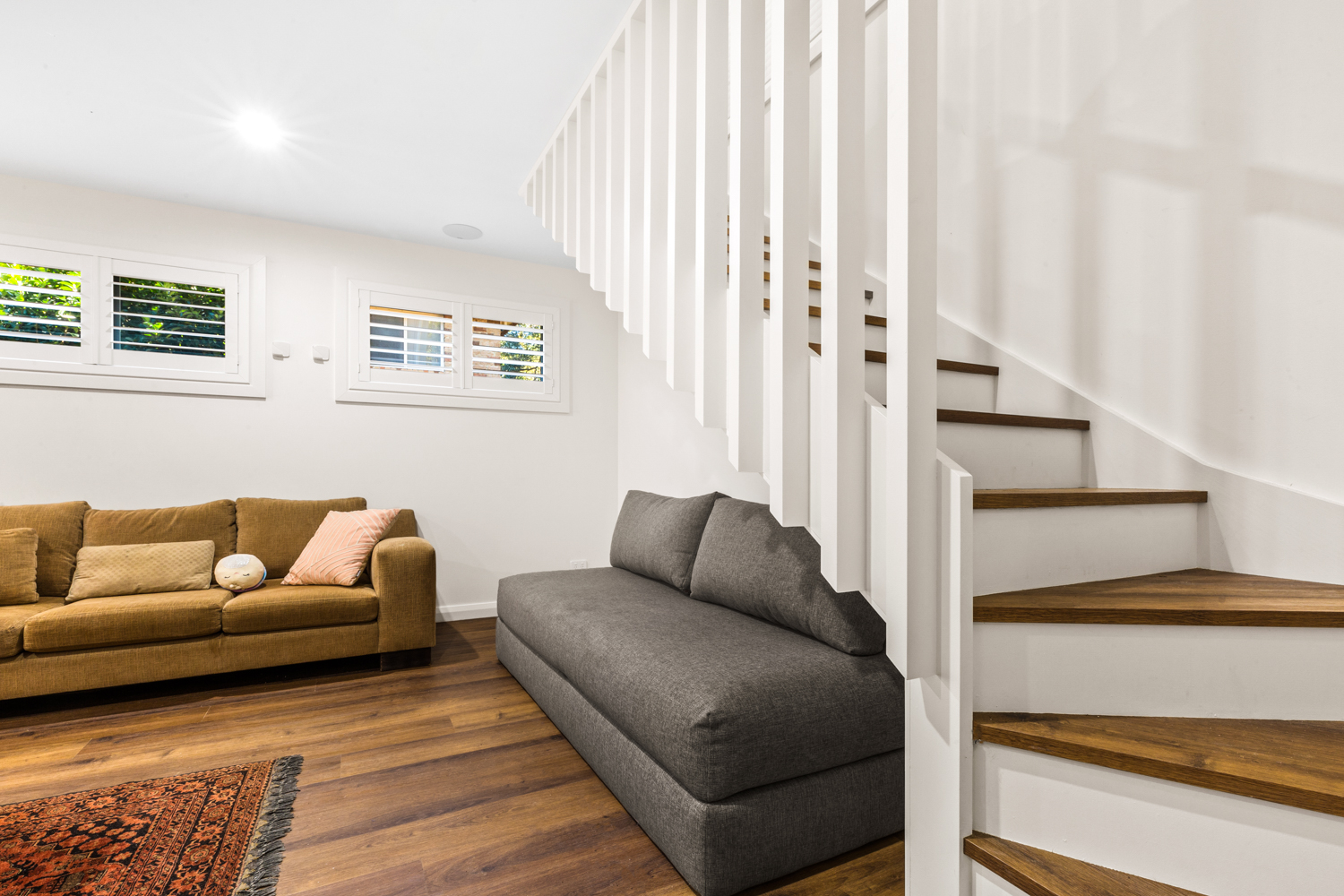
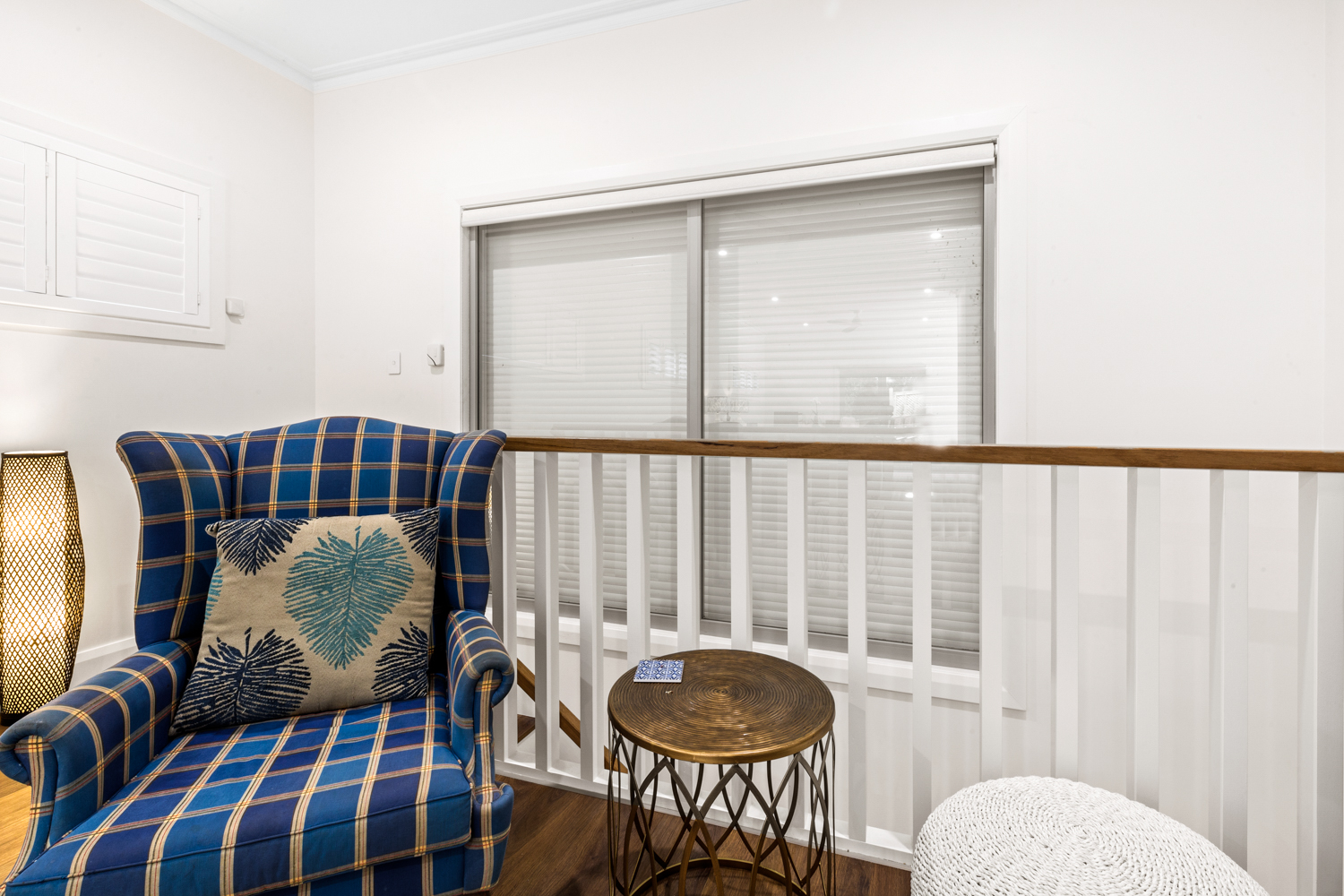
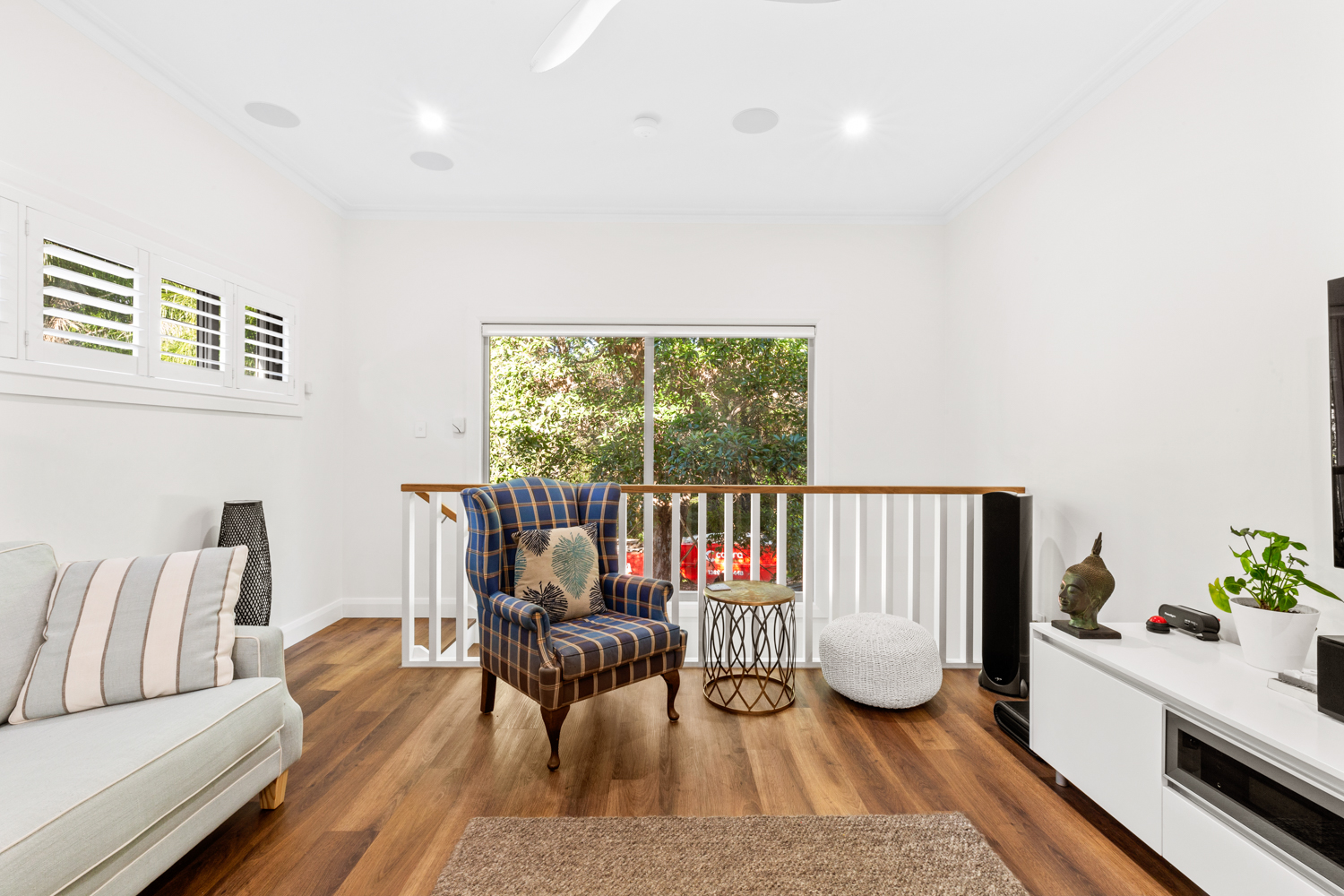
A new internal staircase within the extension connected the main house to the lower level. This changed the usefulness of the old room beneath the house: instead of being isolated storage reached from outside, it could become a home office connected to the rest of the home.
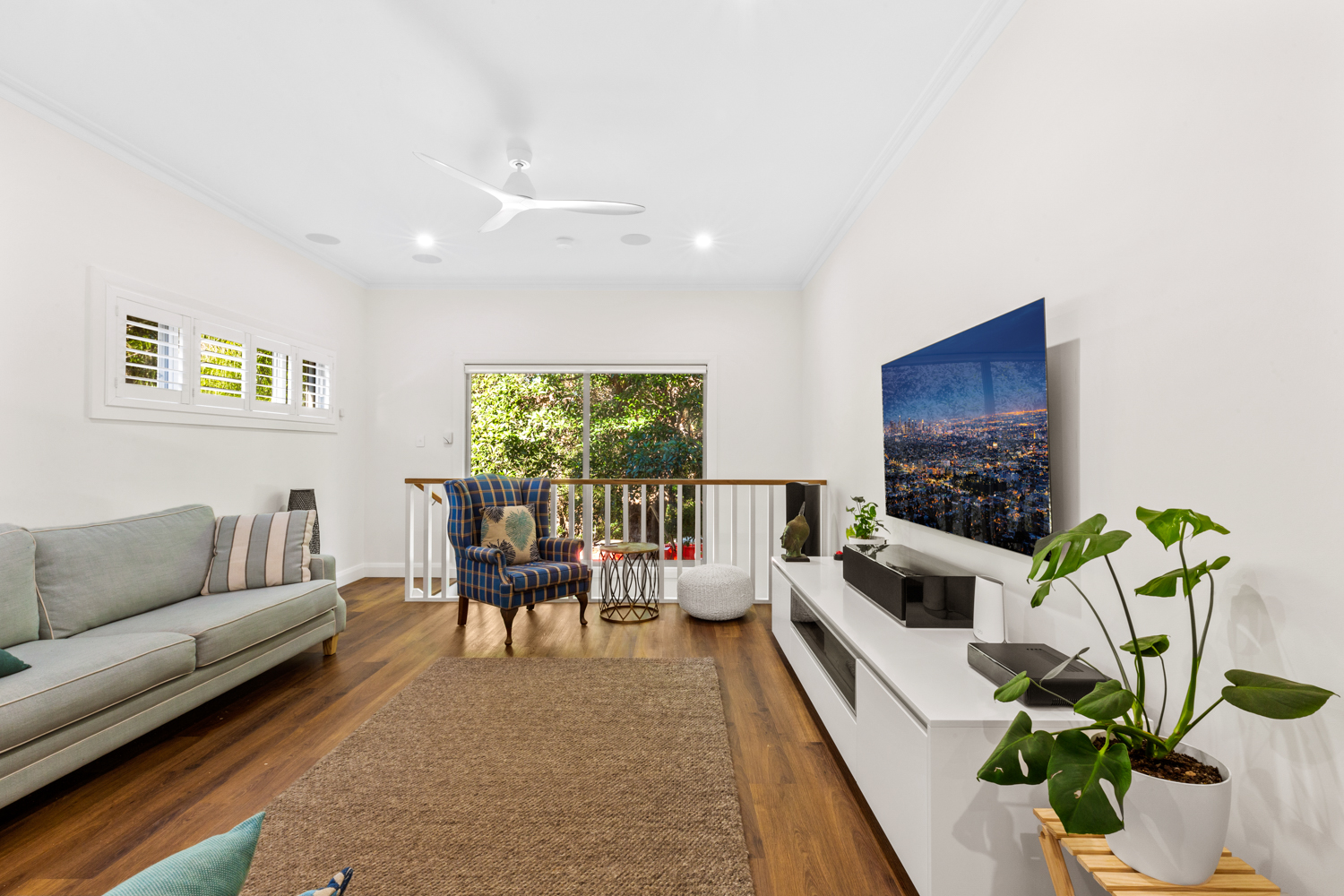
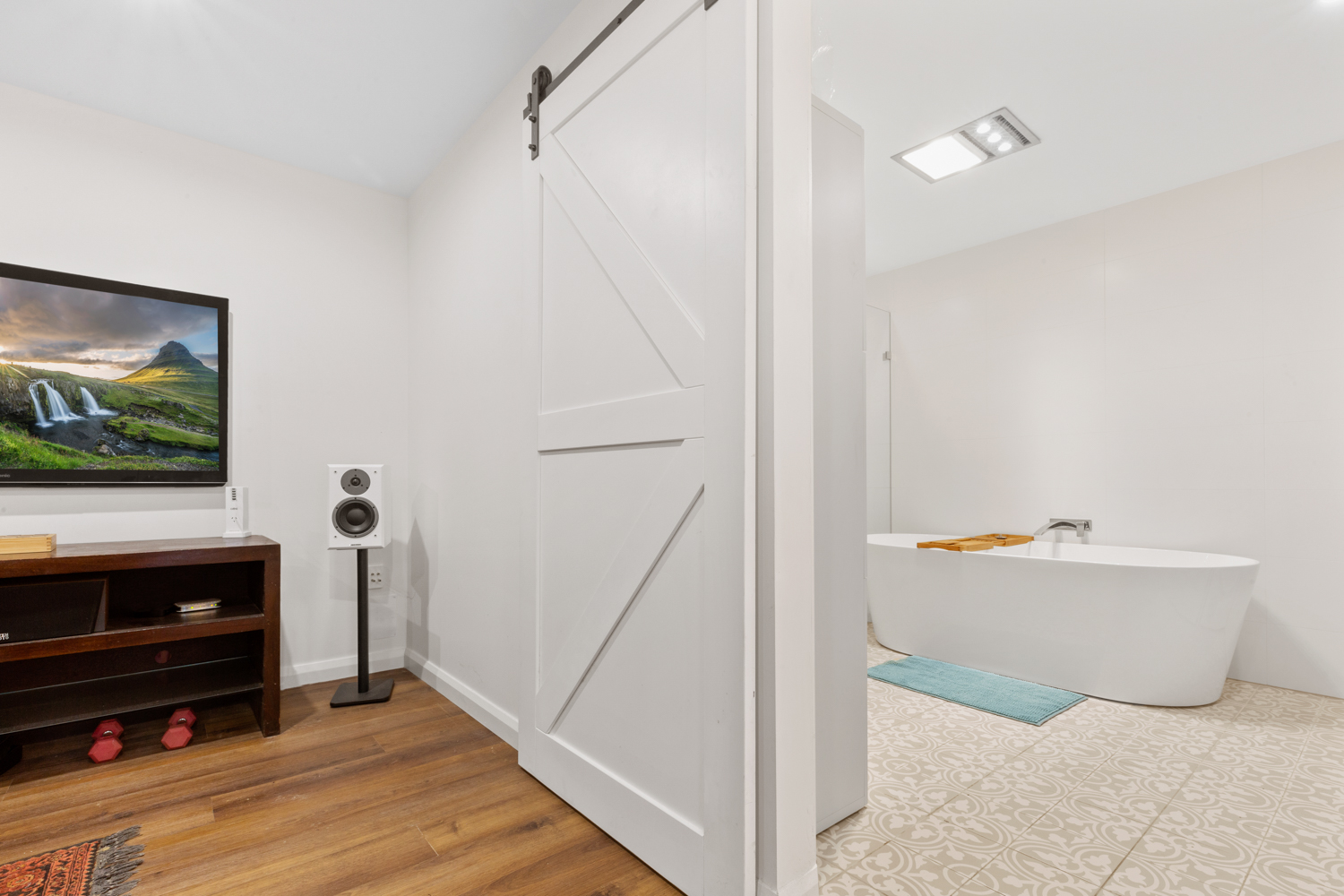
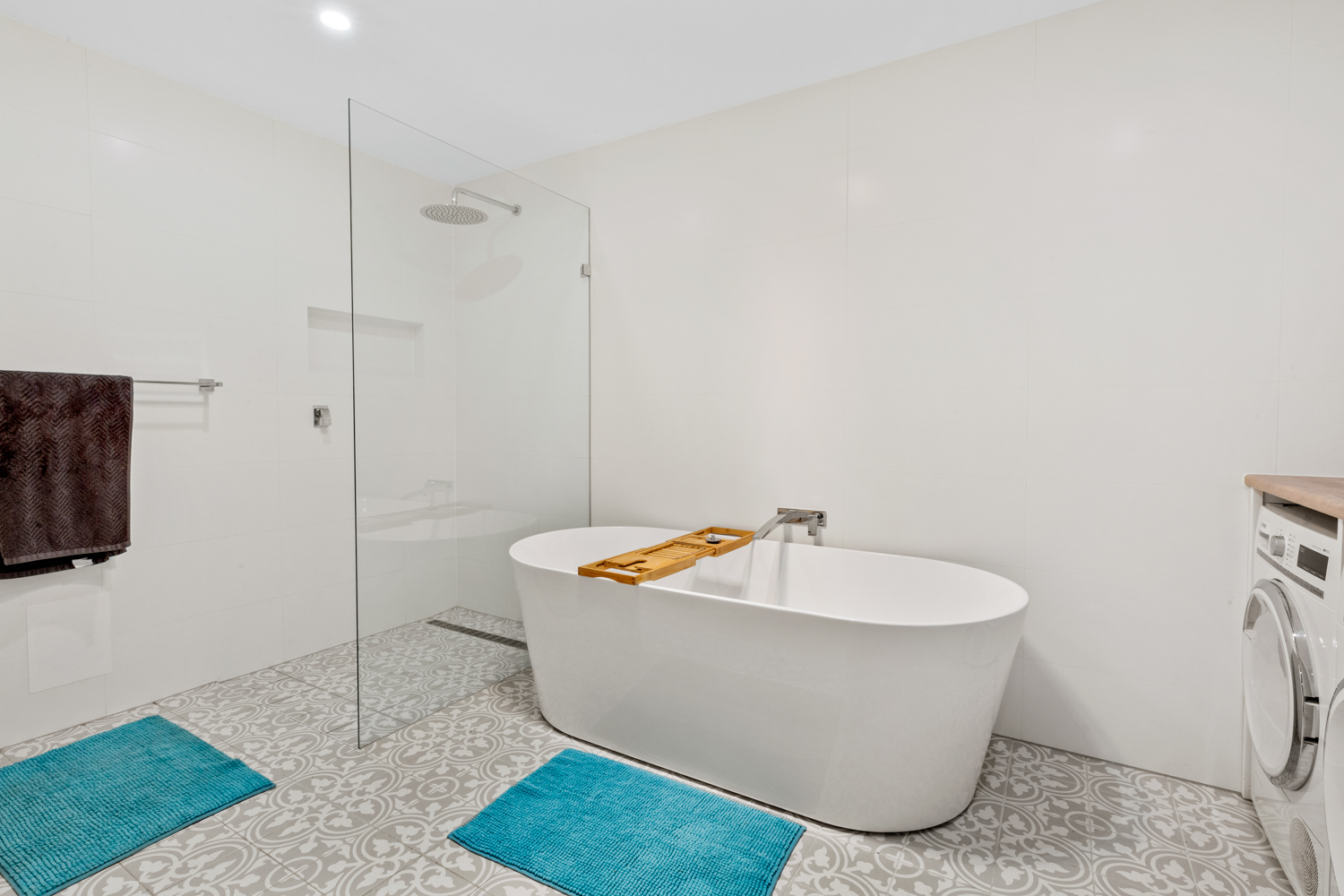
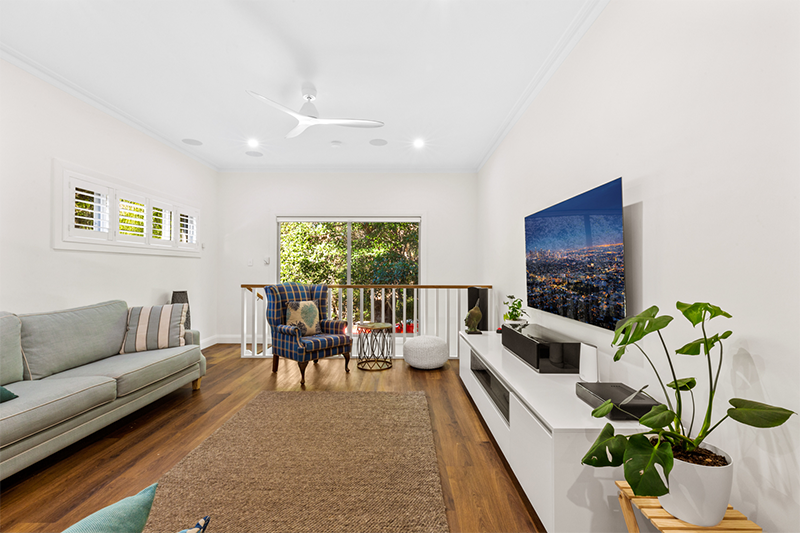
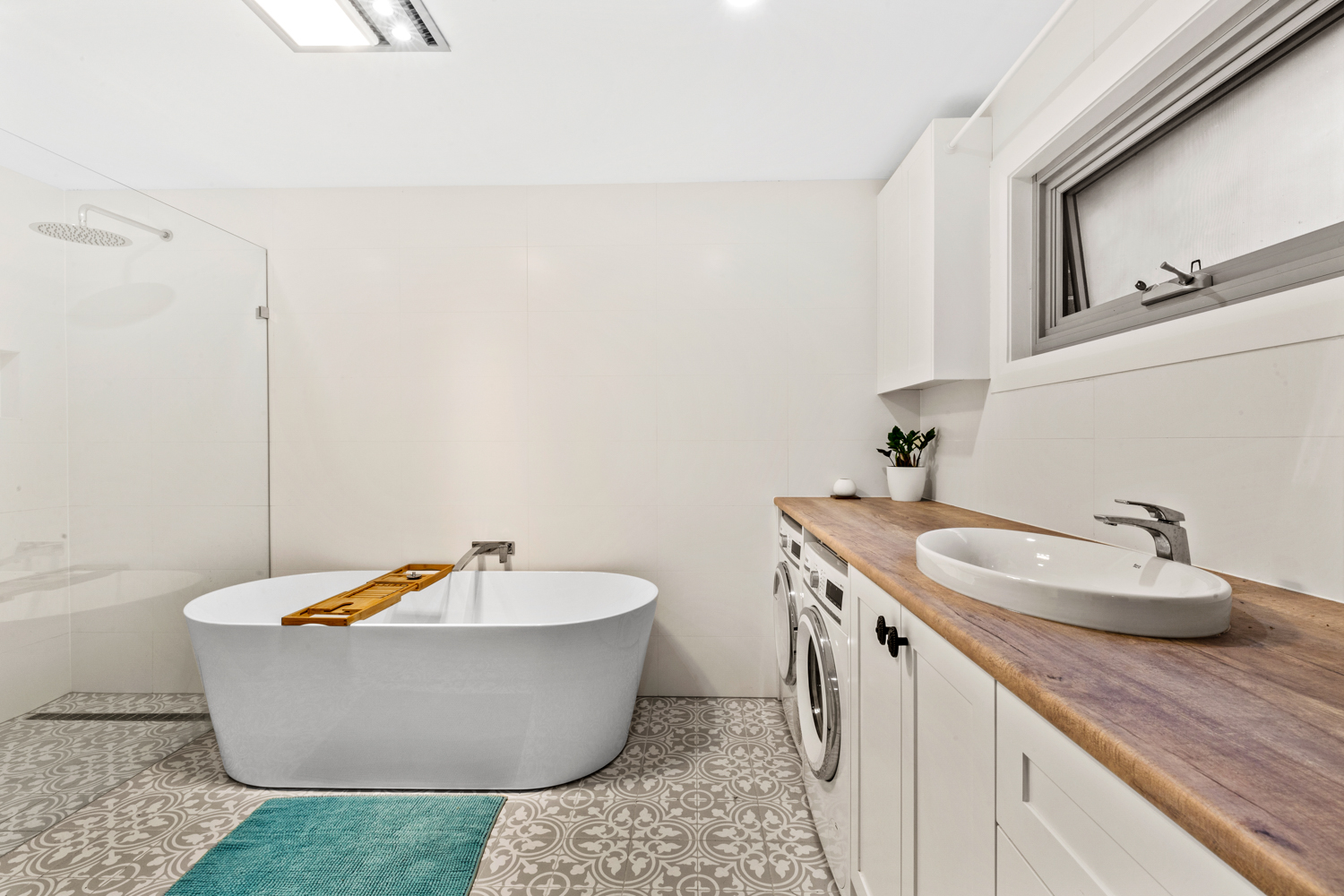
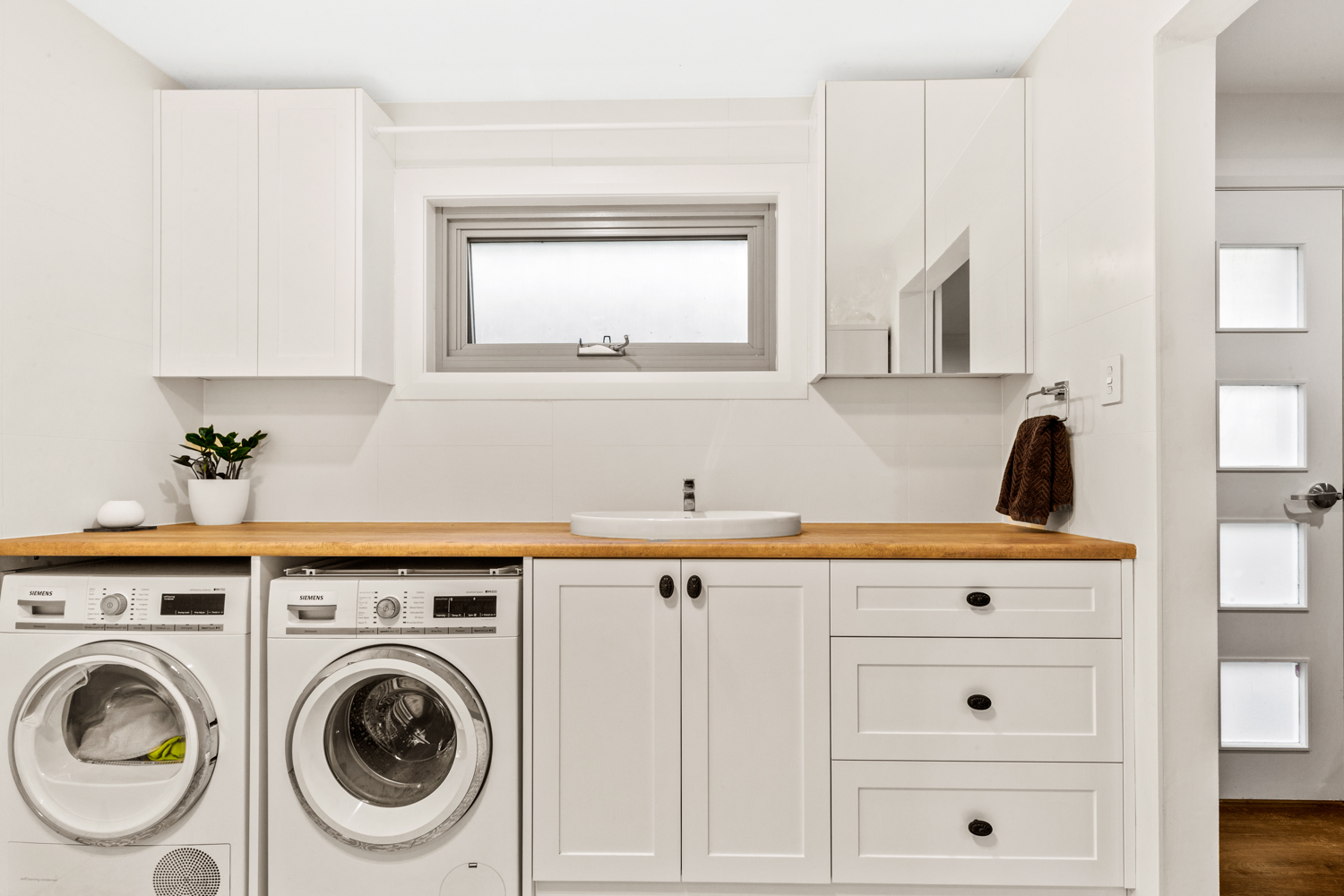
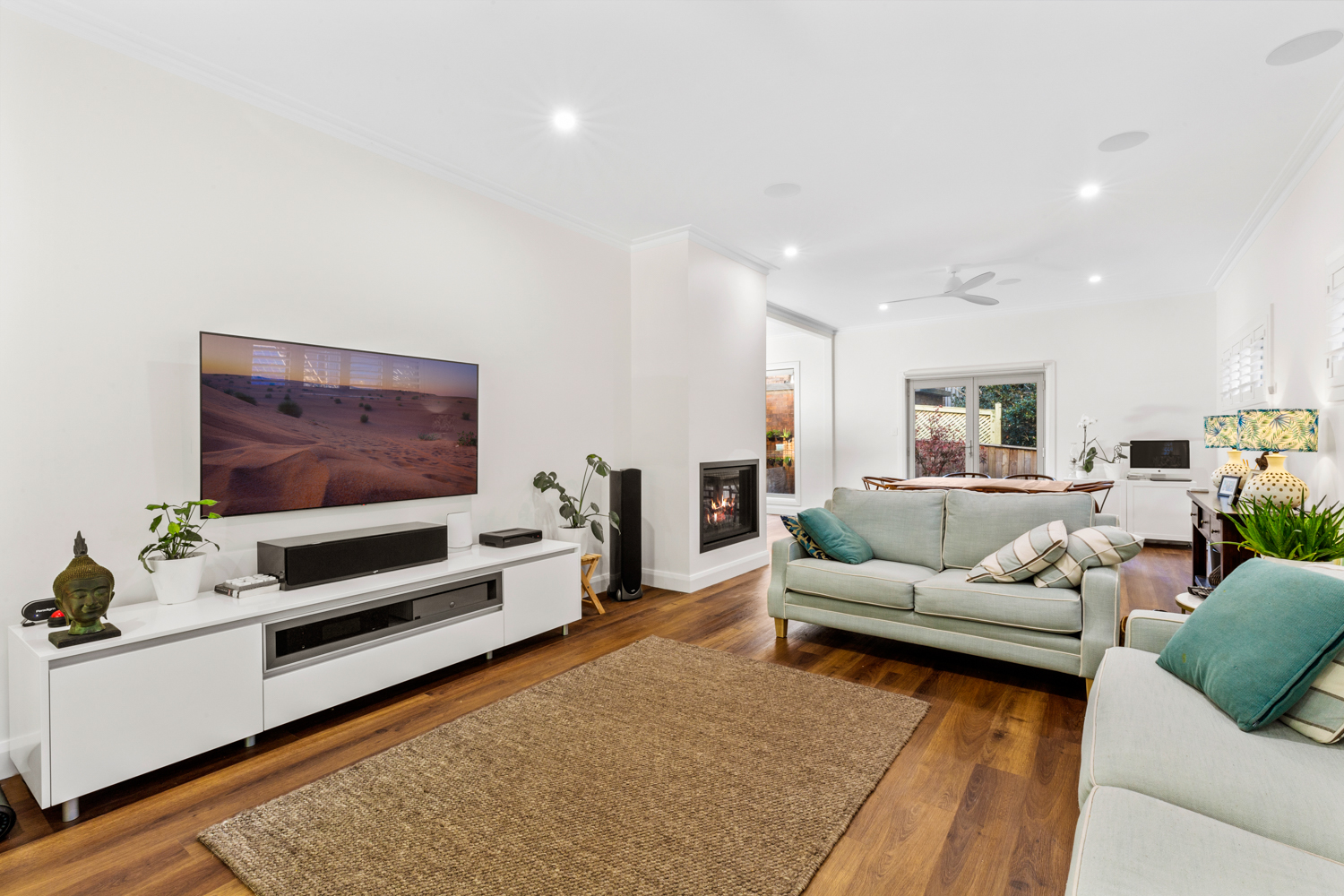
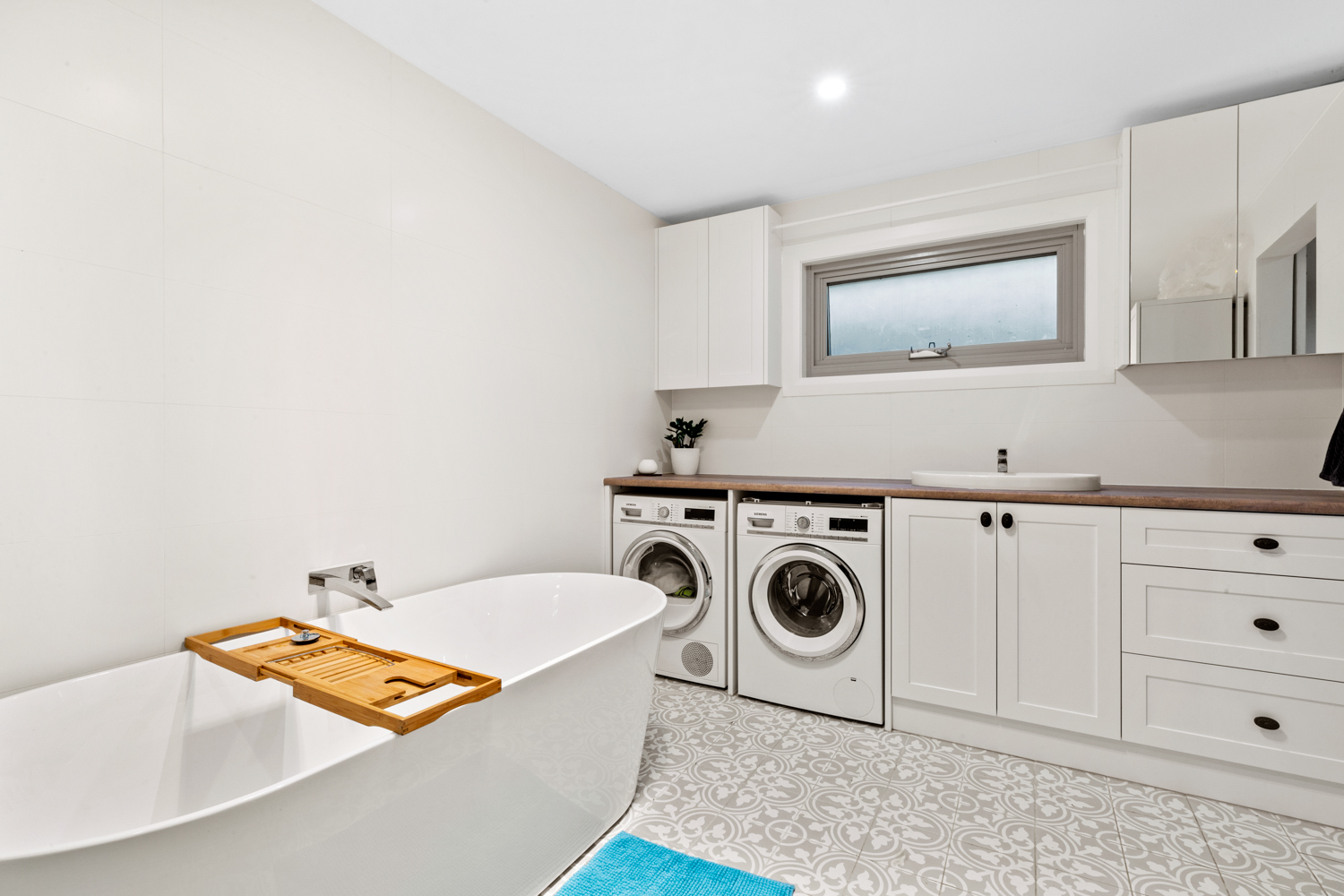
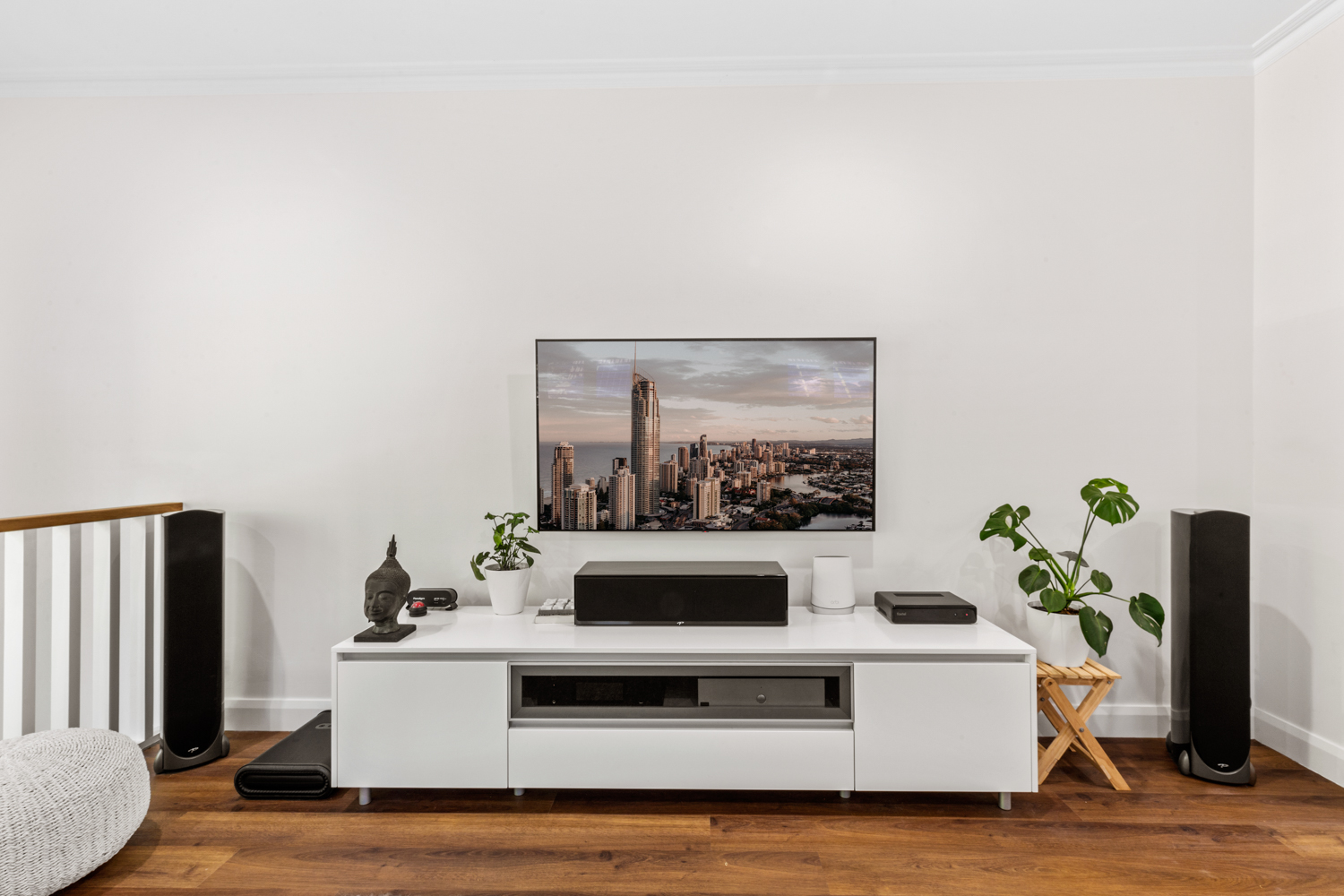
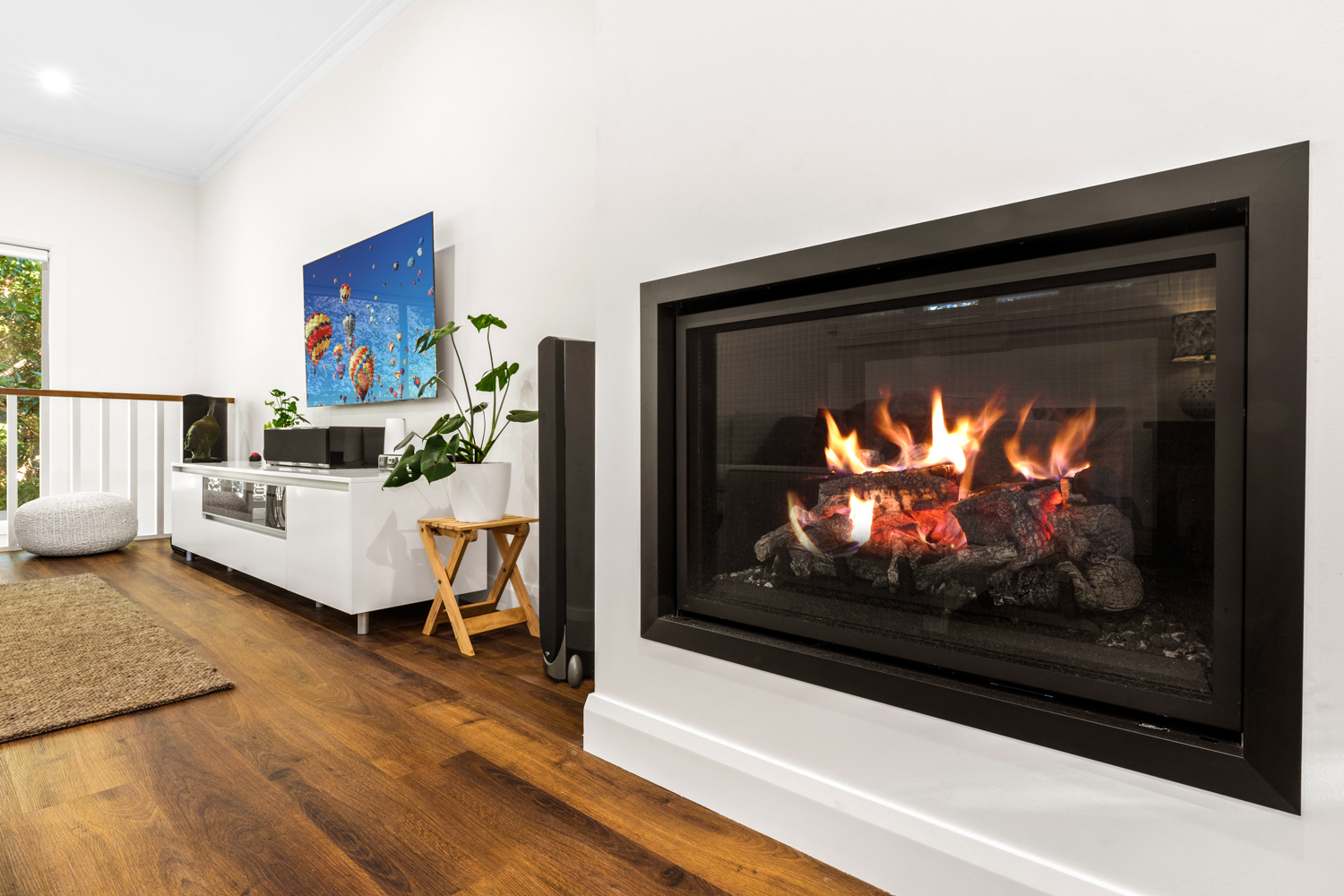
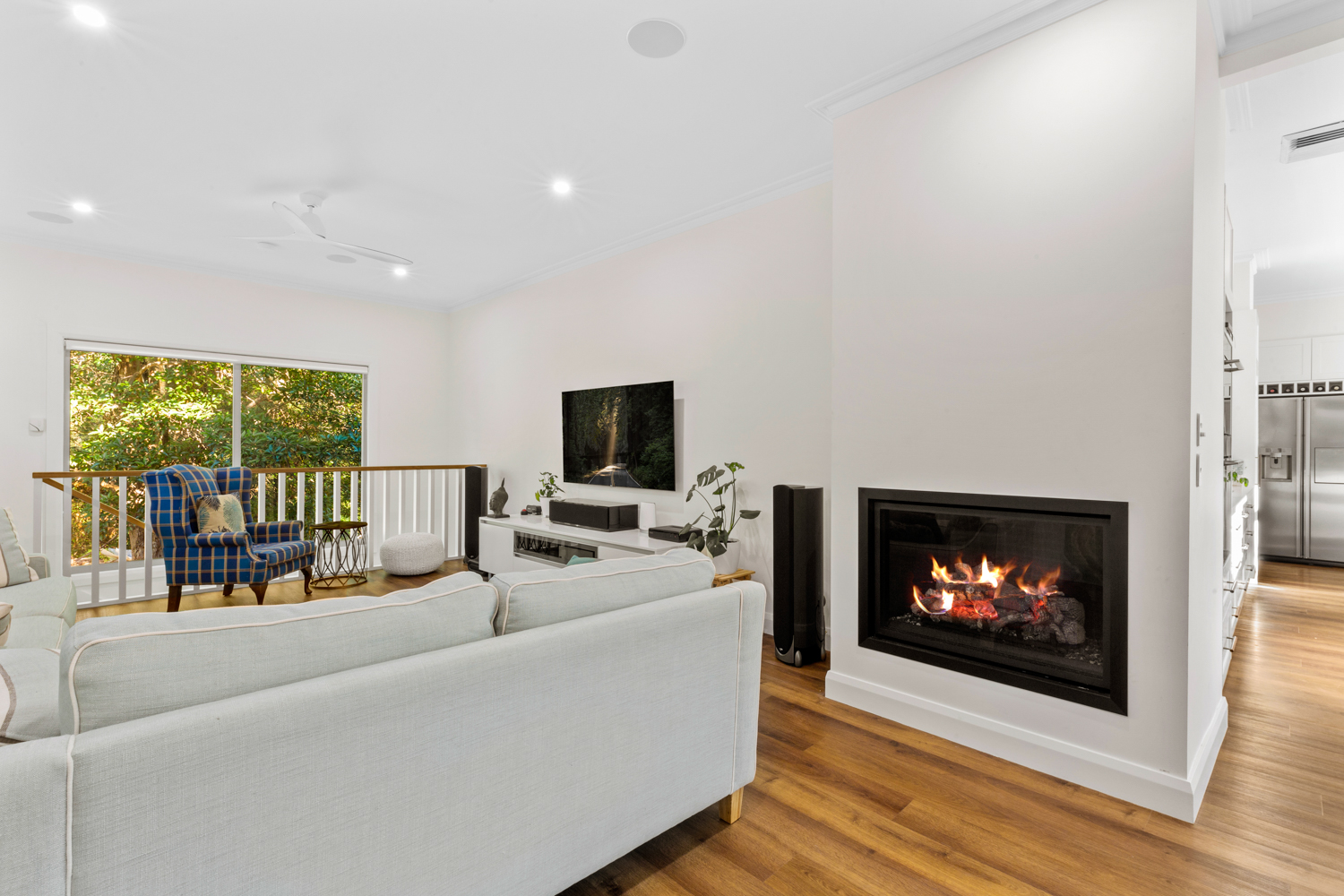
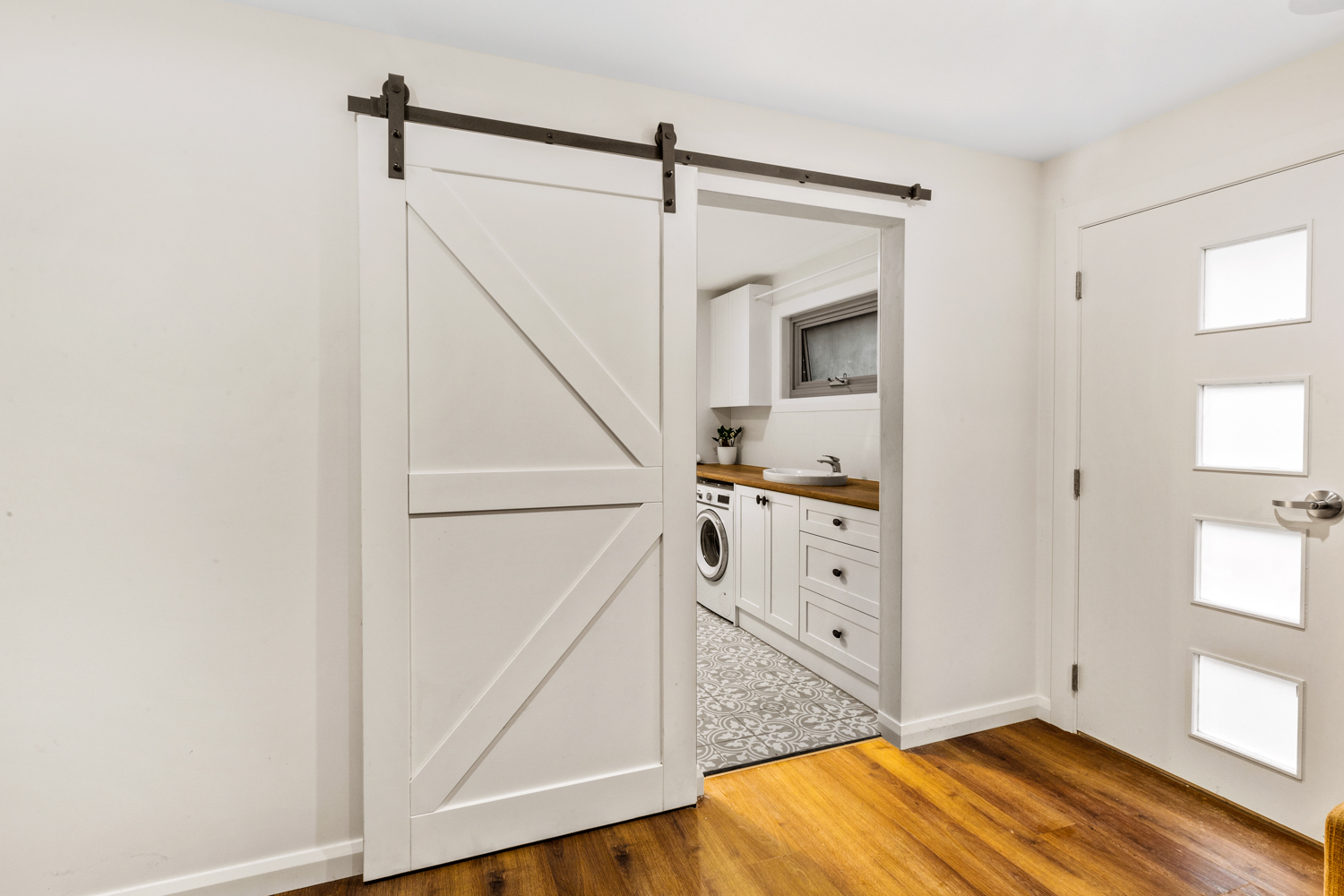
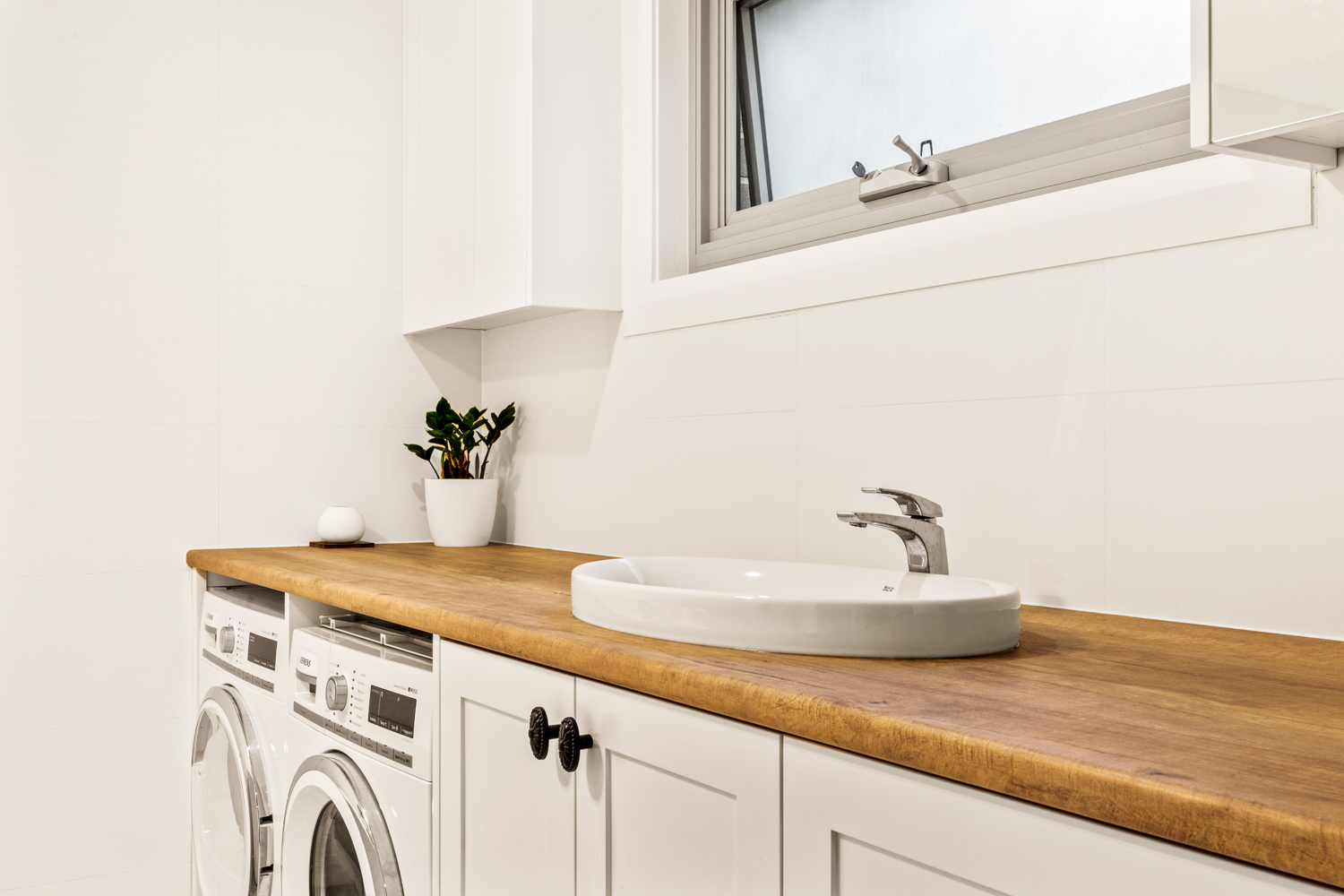
Work to the office included a waterproof membrane, a topping slab and new flooring. The new lower level also provided a relaxed retreat with space for a television and sofa, a generous bathroom and laundry area, and a deck at the rear.
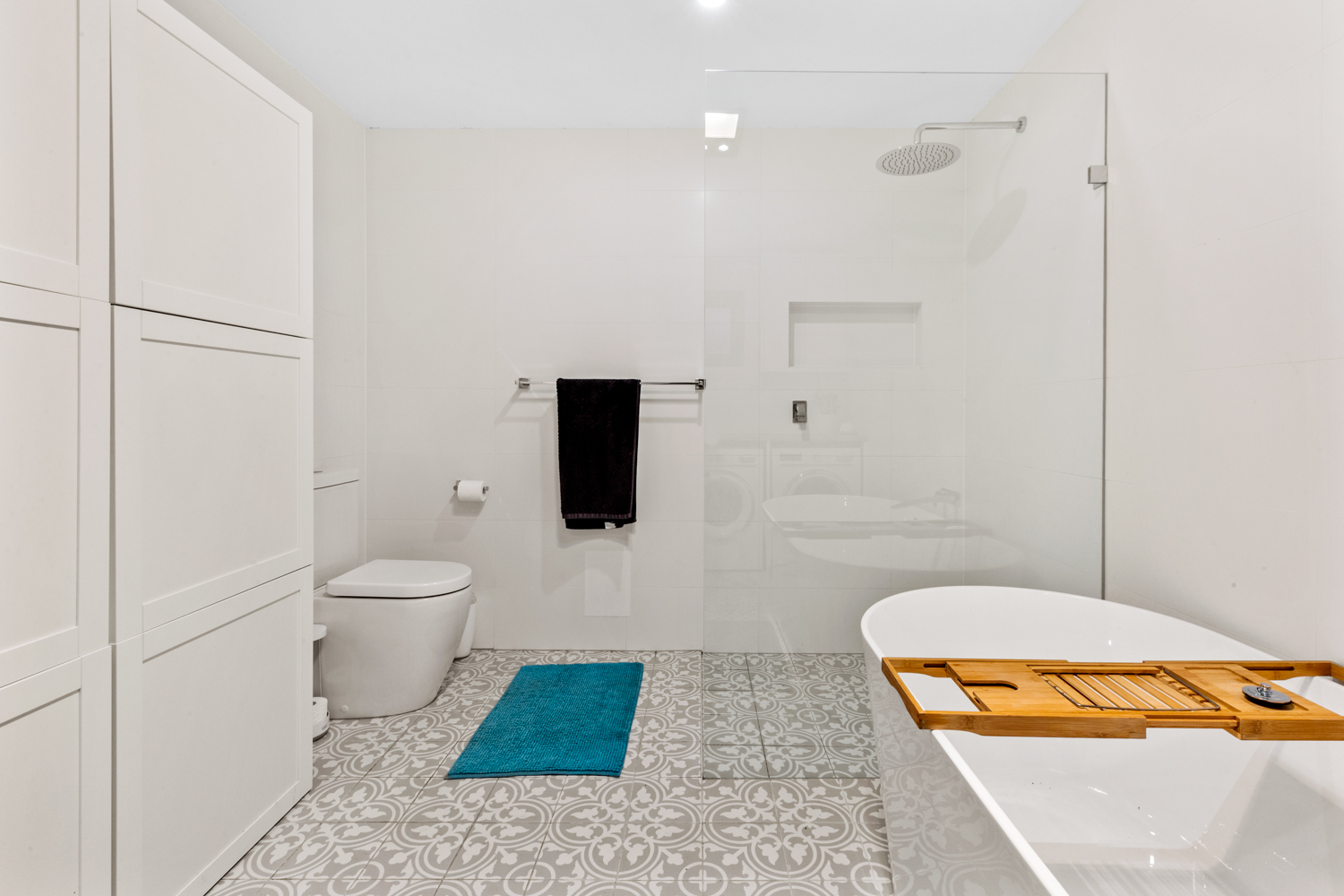
The bathroom brought together a bath and a shower area with a single screen. The spacious laundry made room for everyday household tasks, while the deck extended the living area outdoors.
An open-plan kitchen, dining and living space
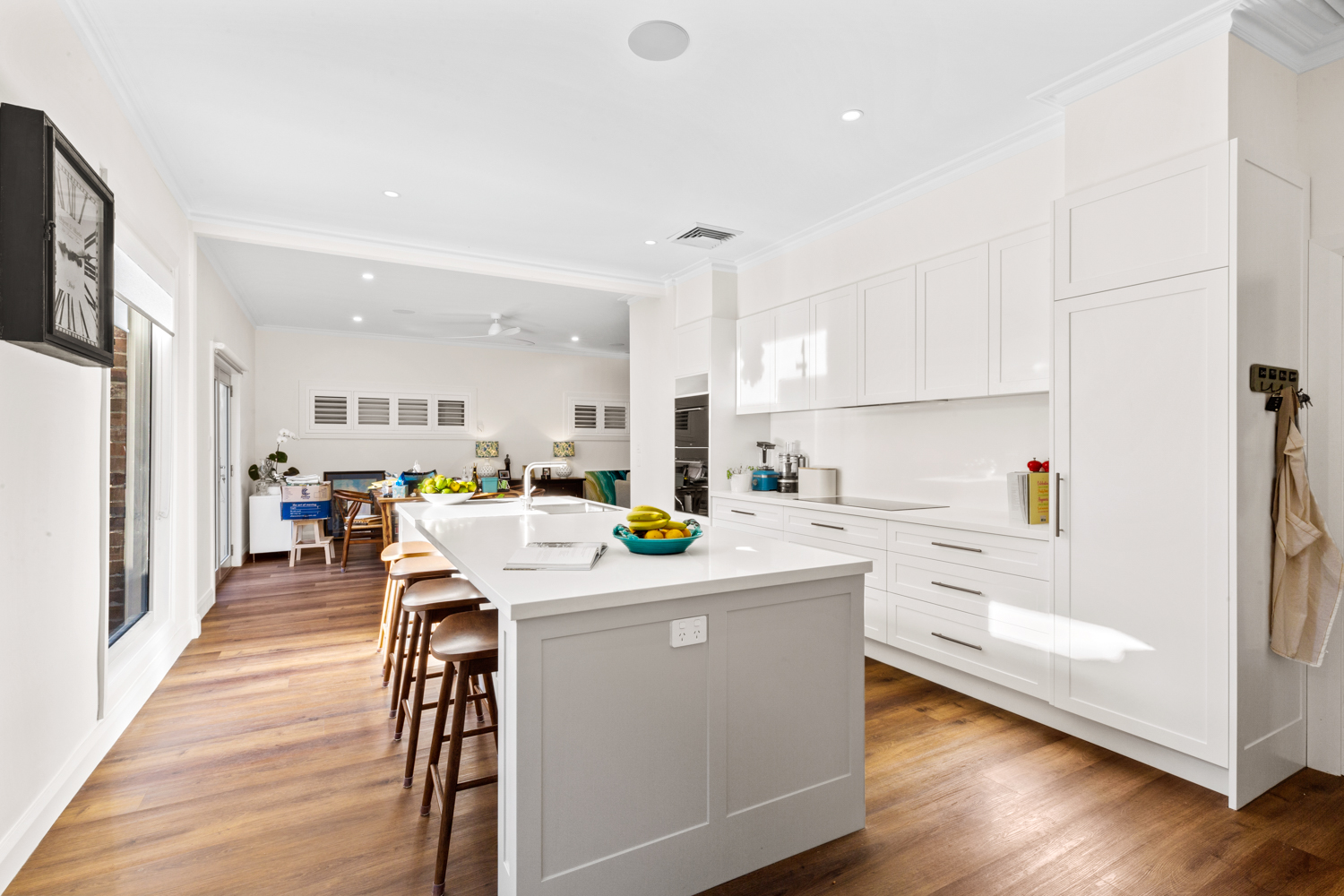
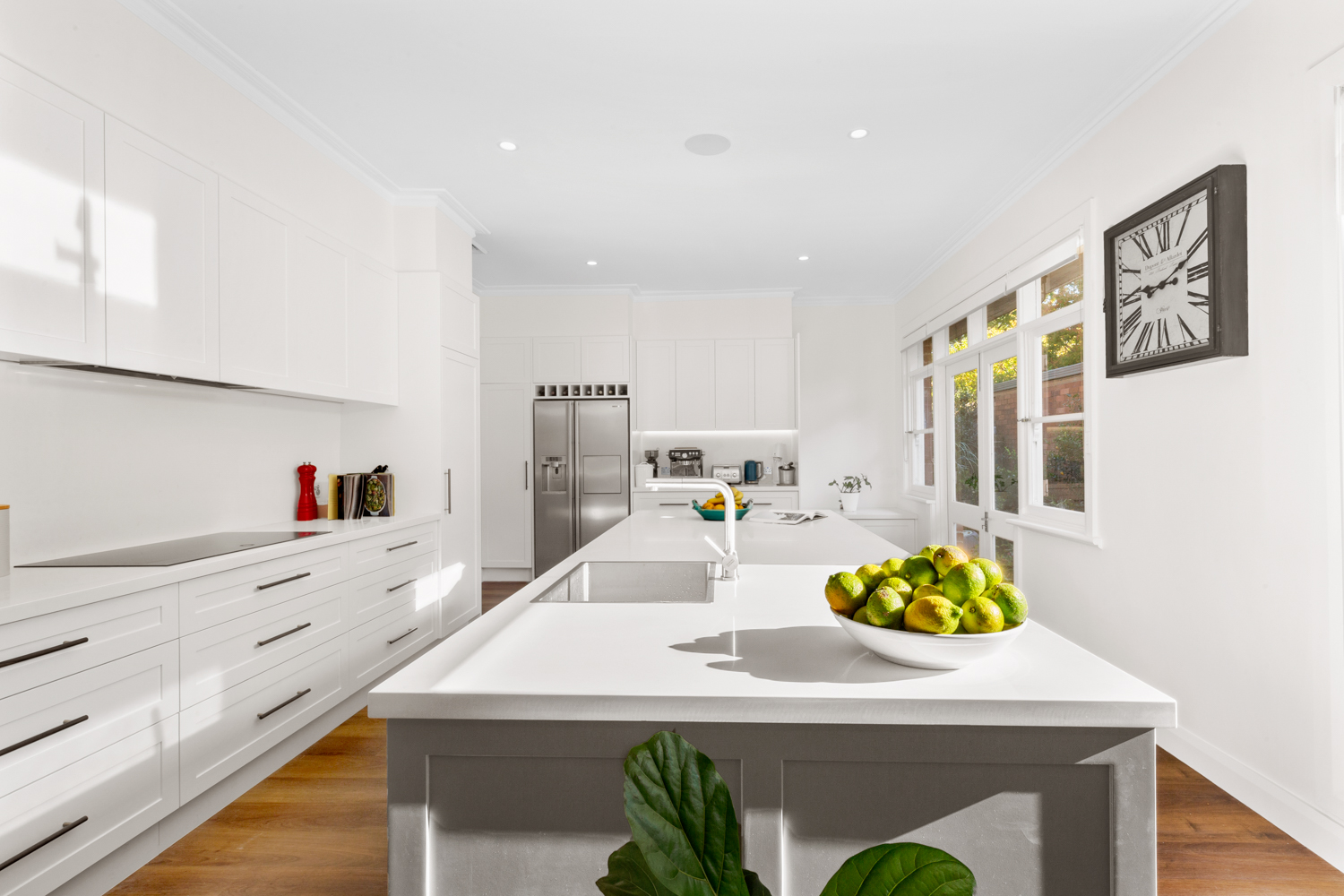
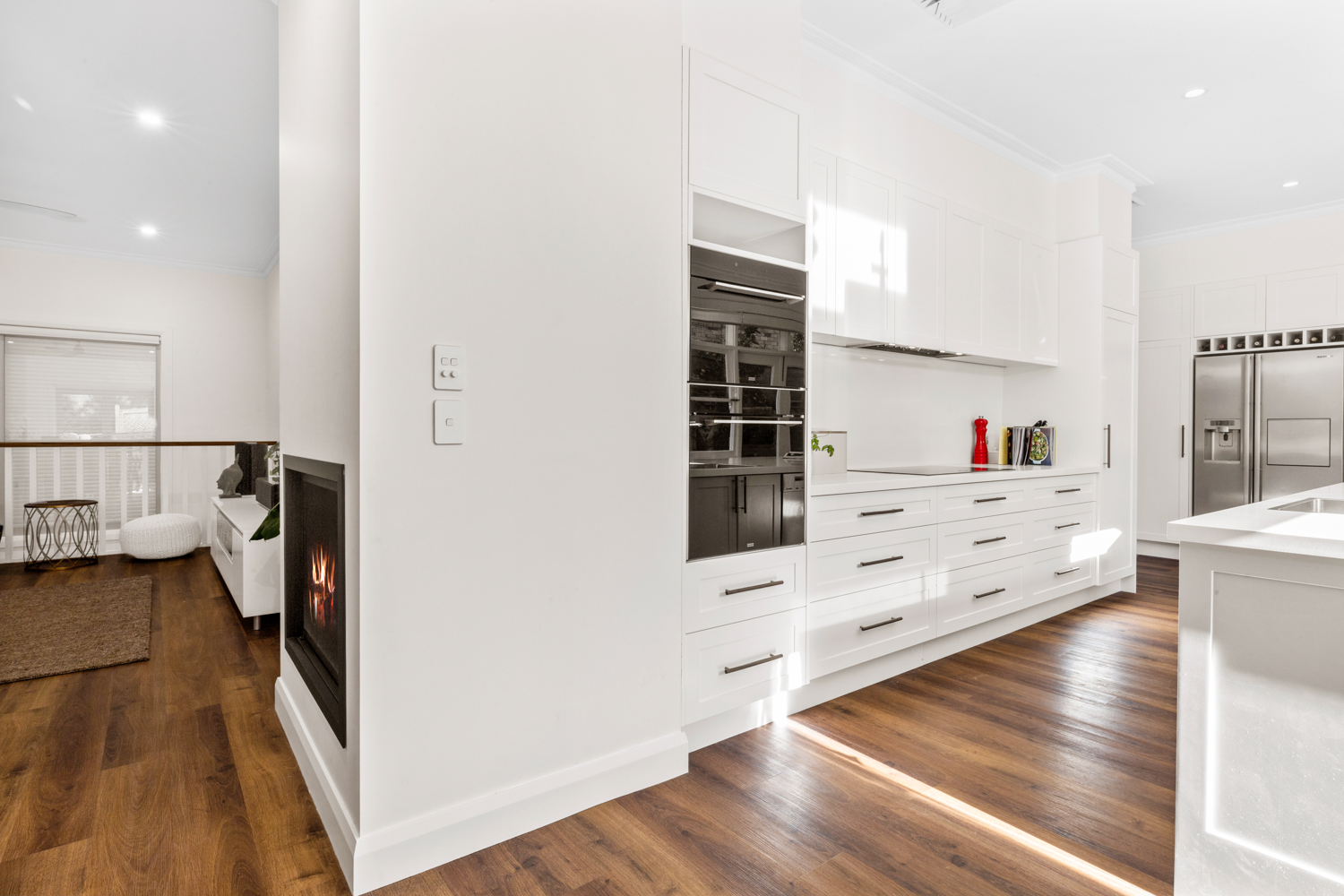
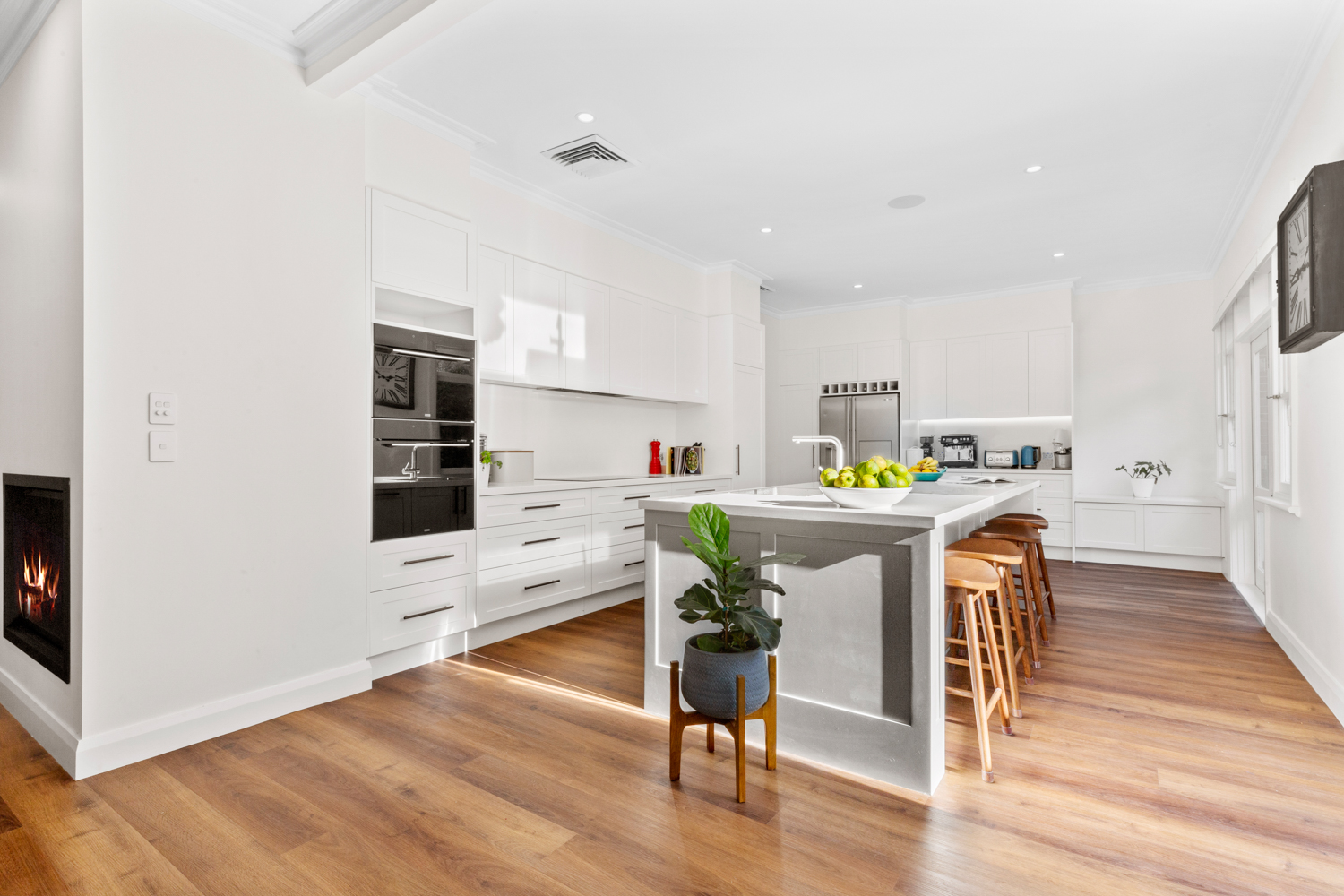
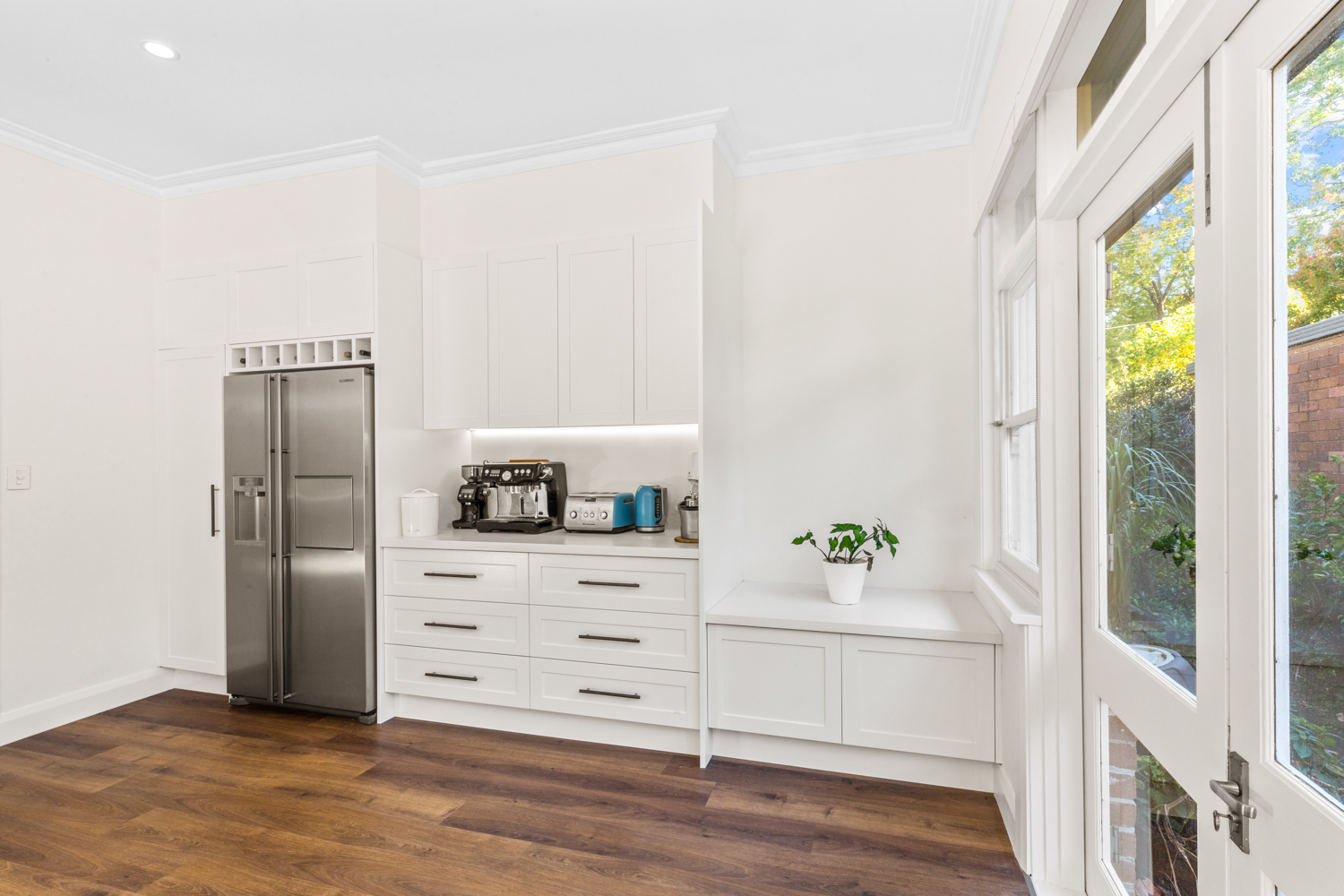
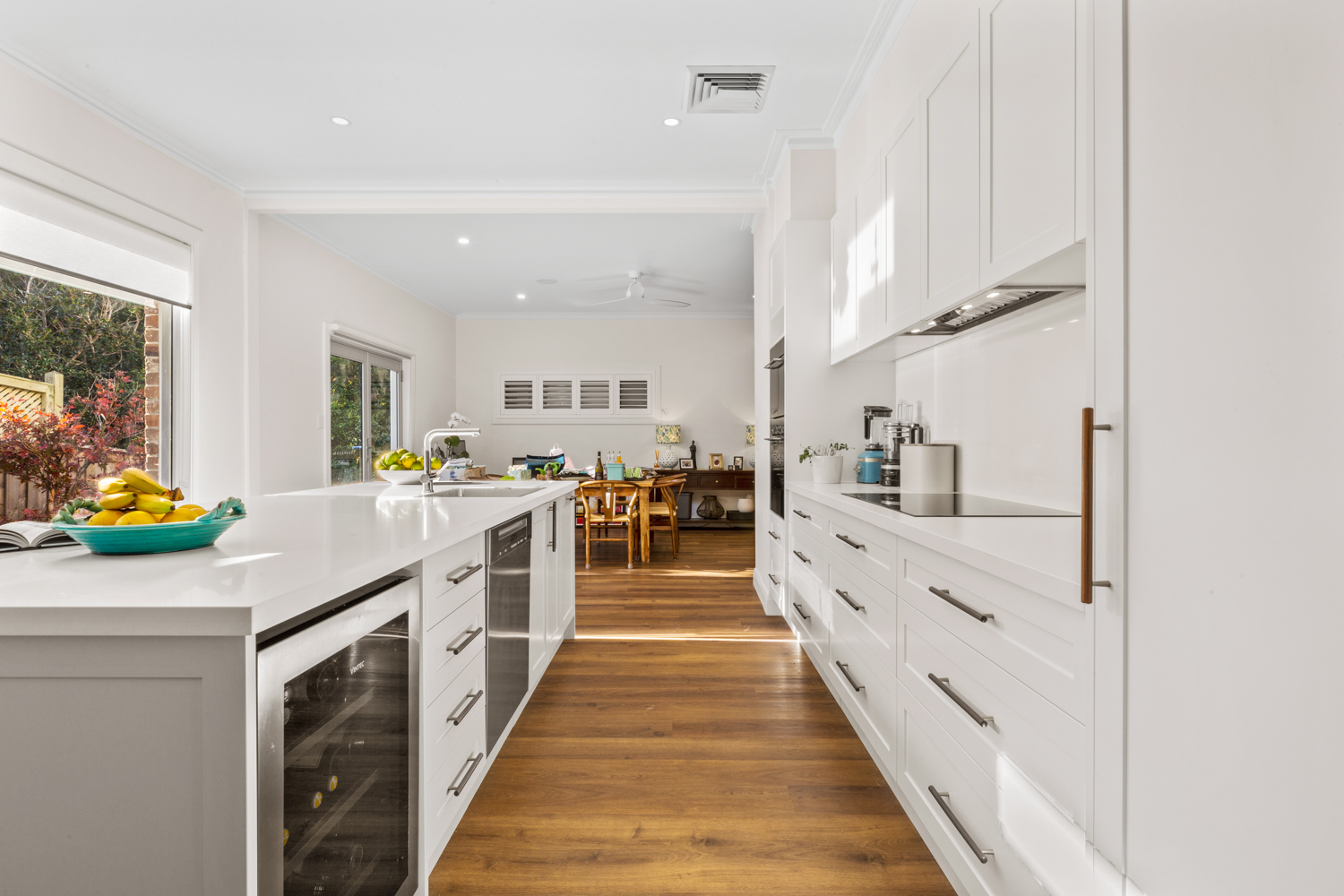
On the main level, the rear wall of the existing house was opened up to connect with the extension. The old kitchen was removed and replaced in the same general position, with a larger, more open layout.
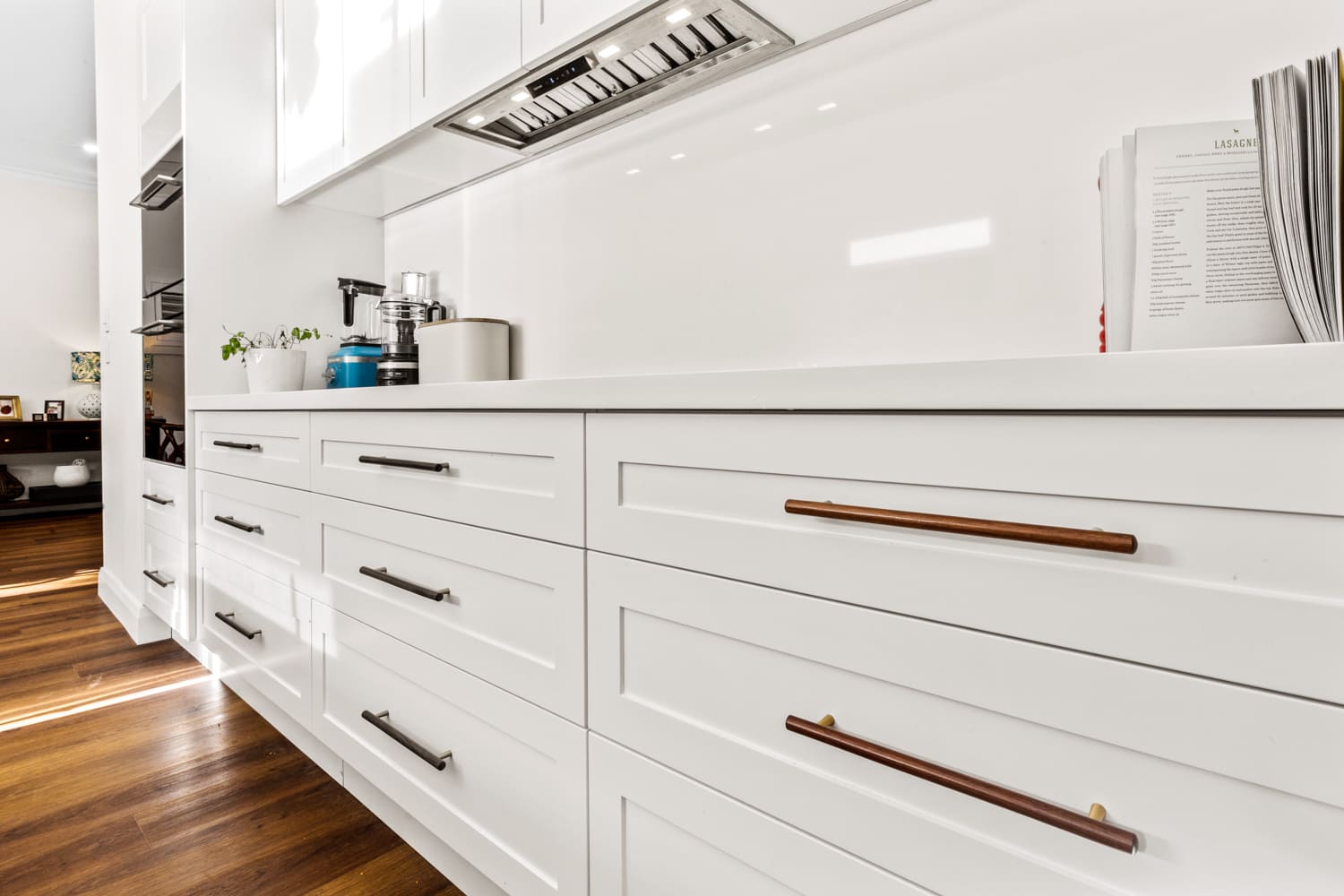
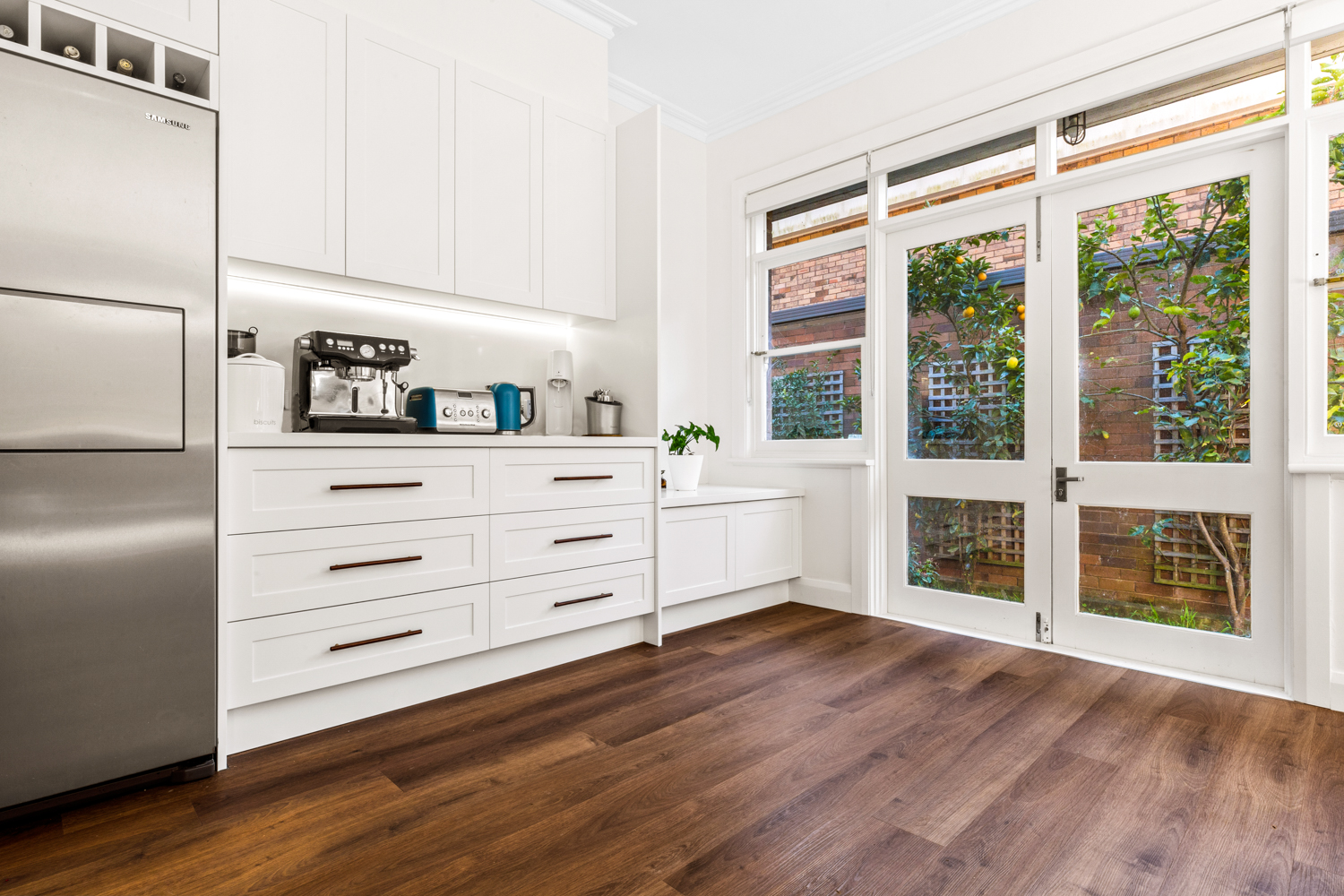
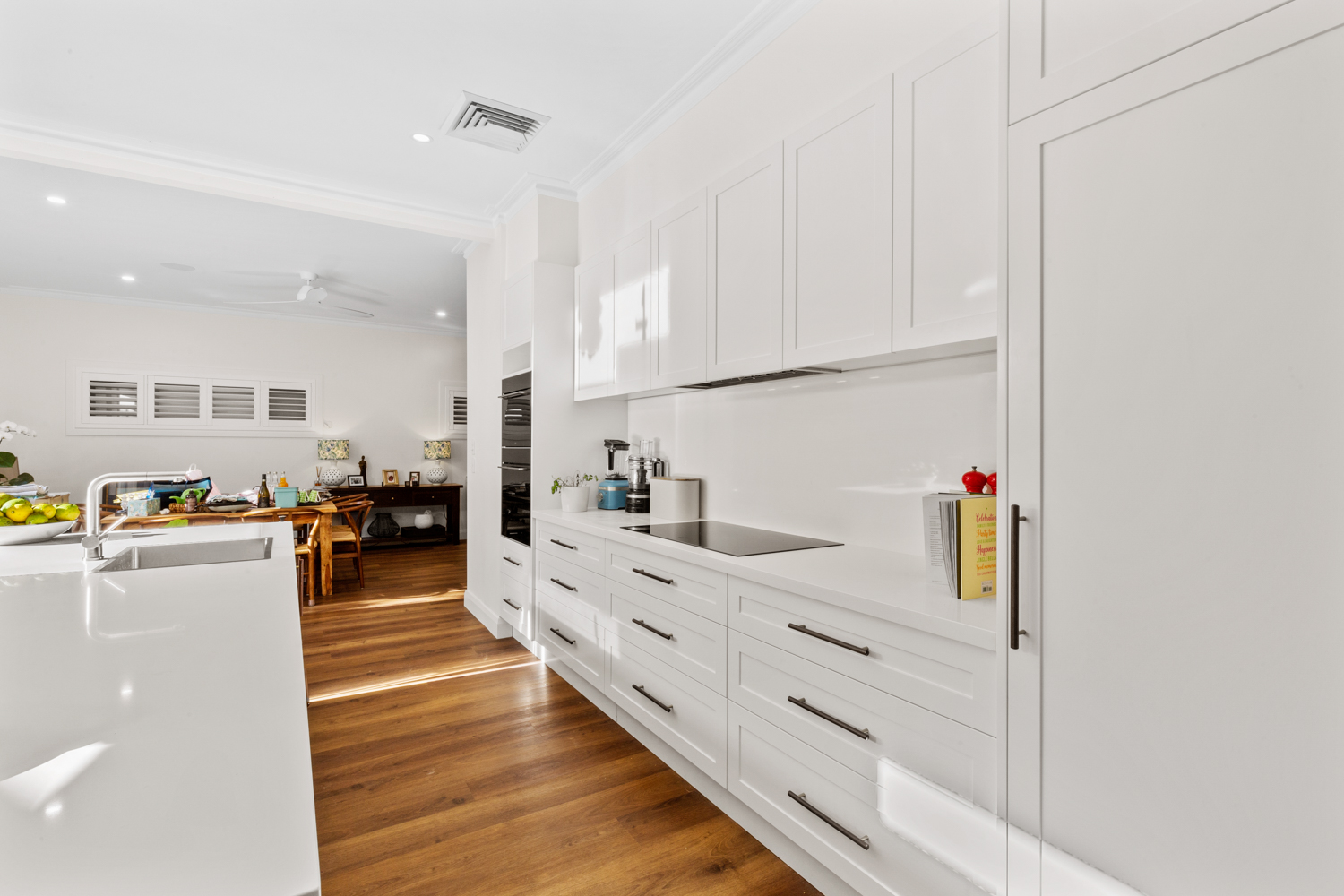
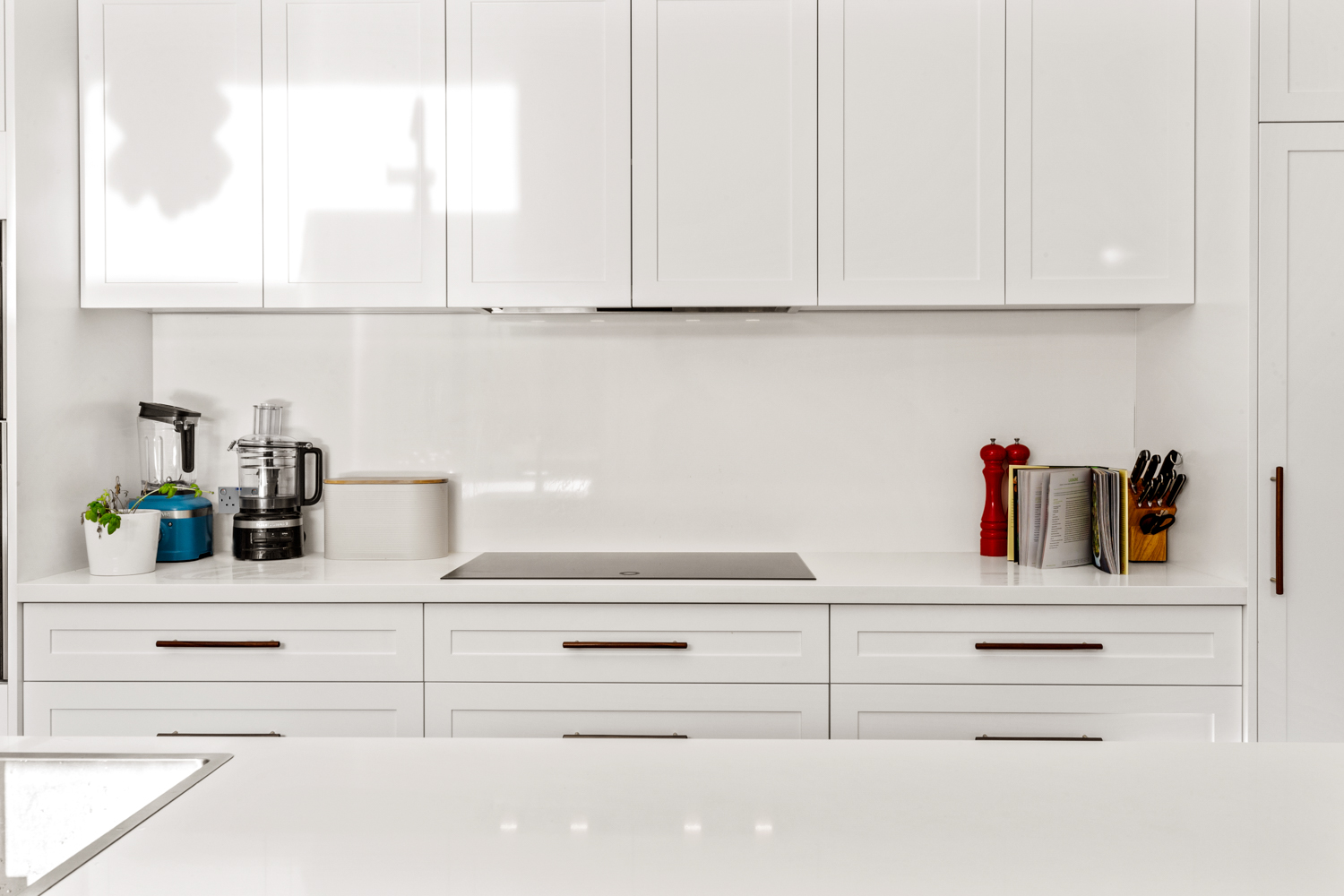
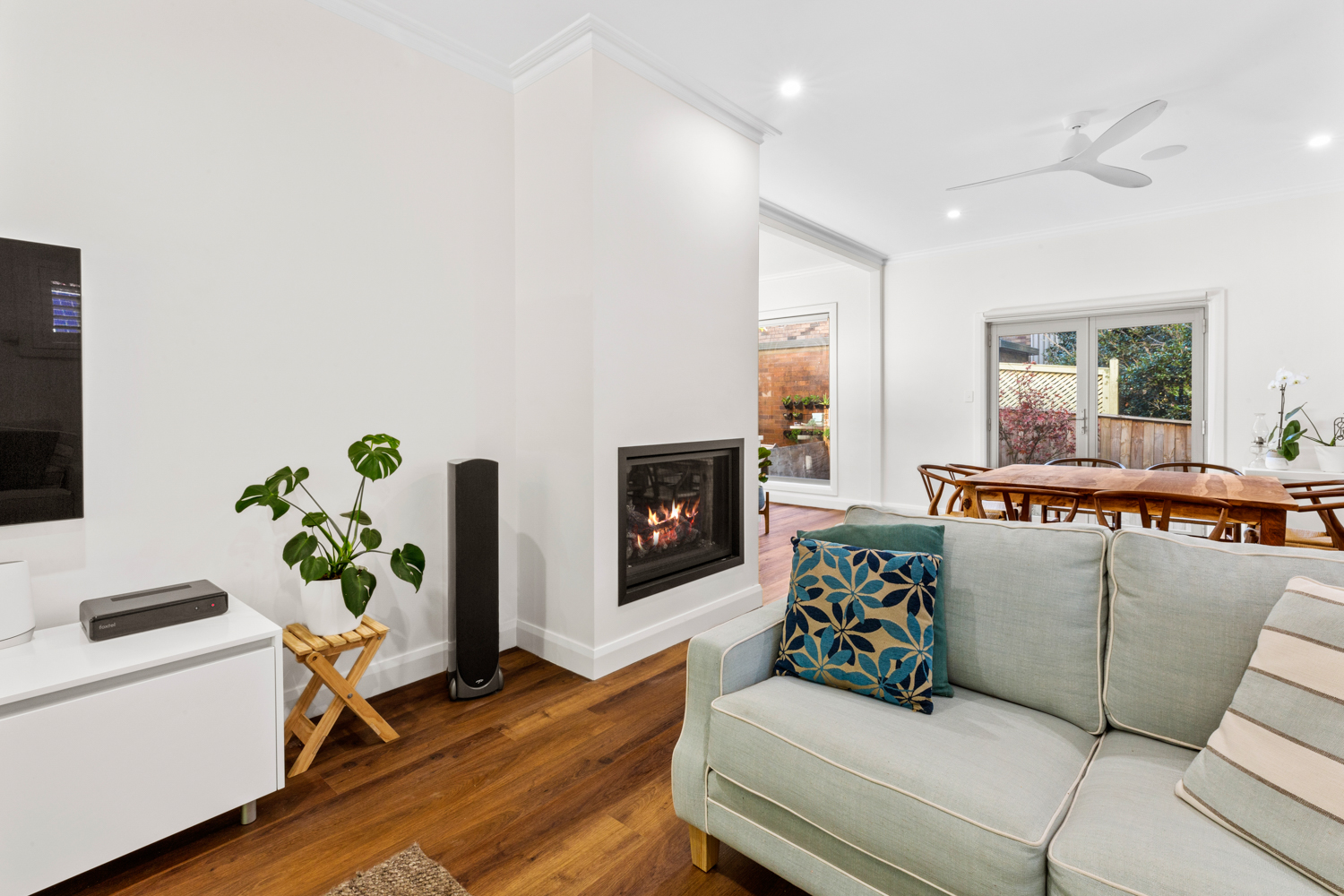
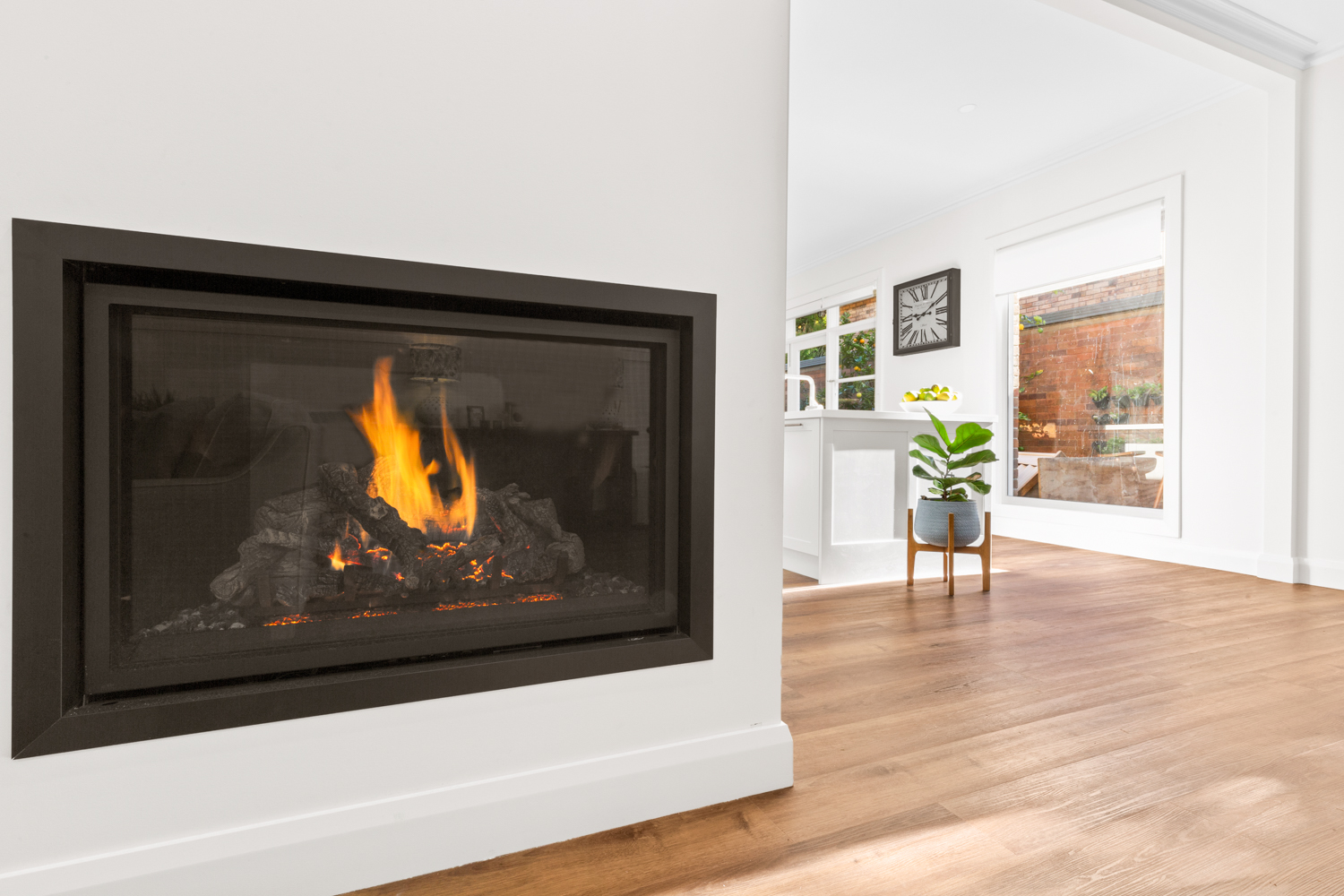
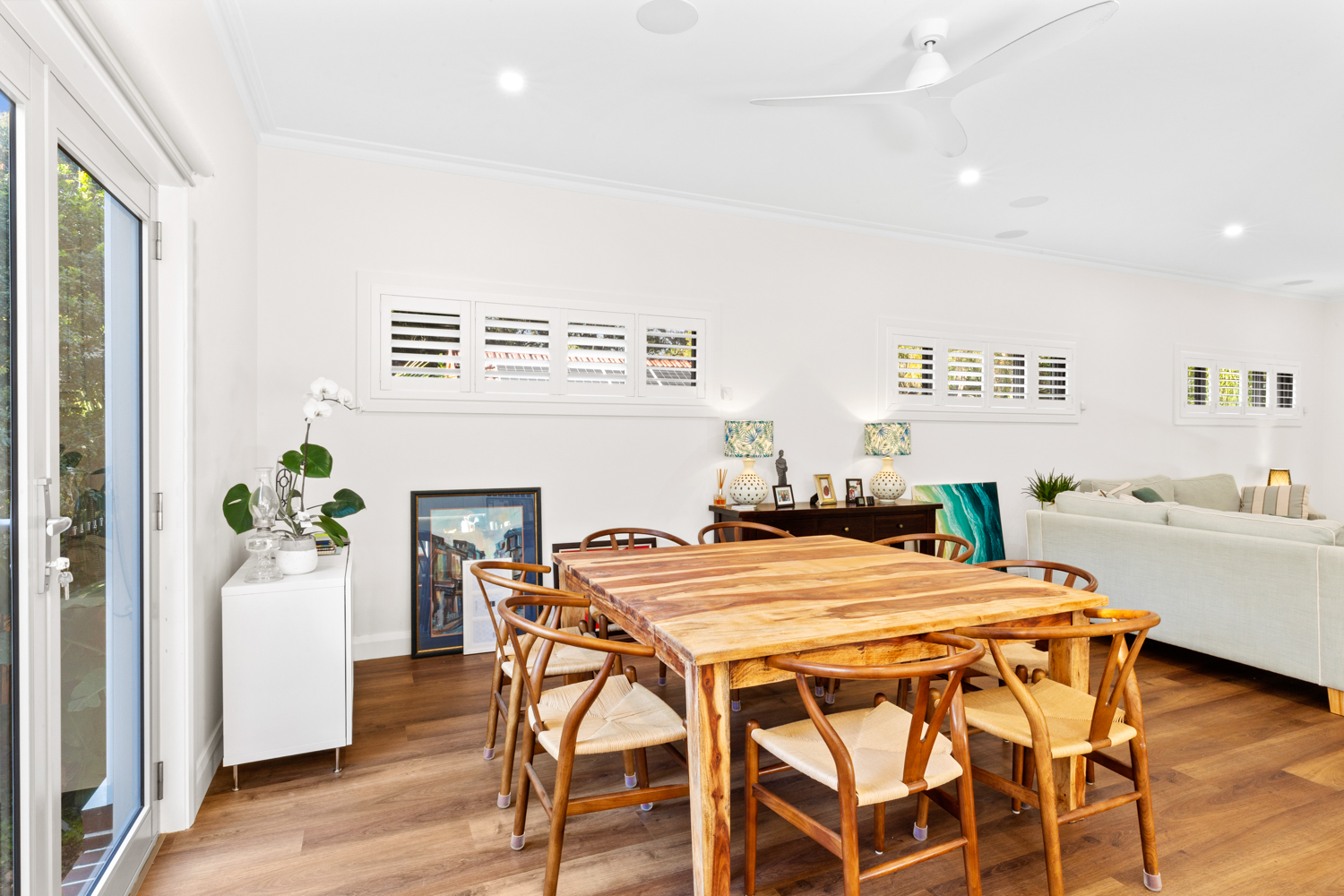
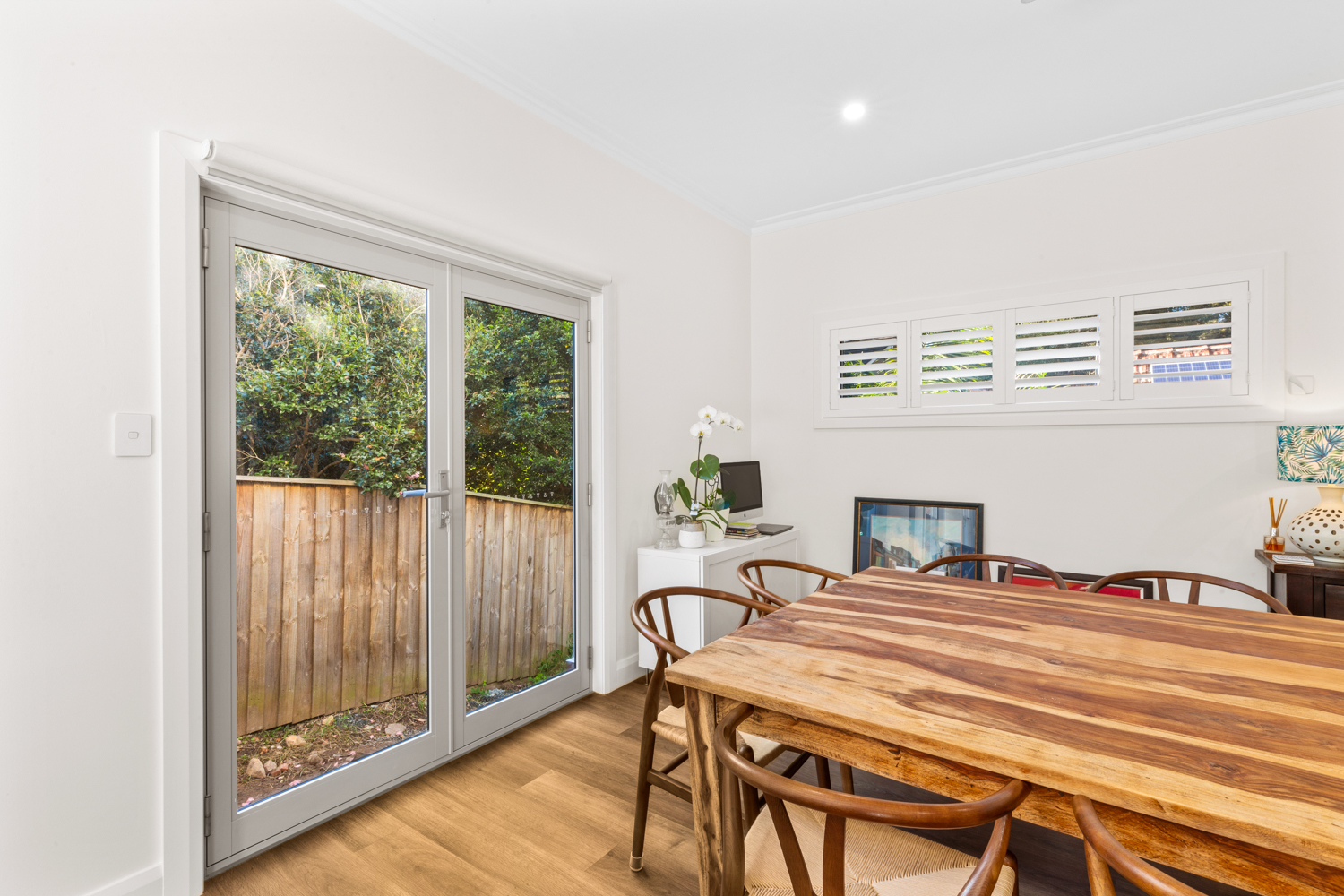
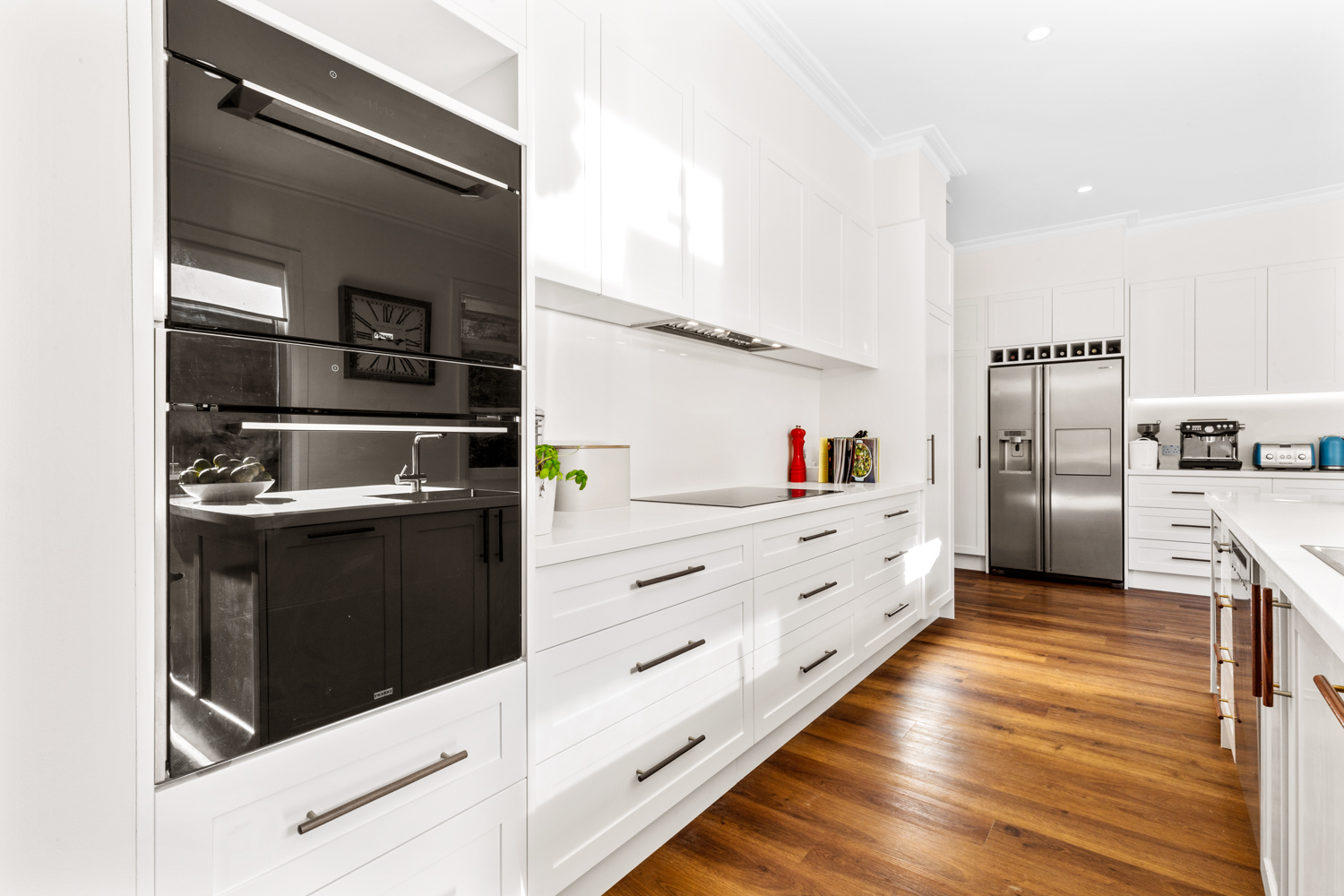
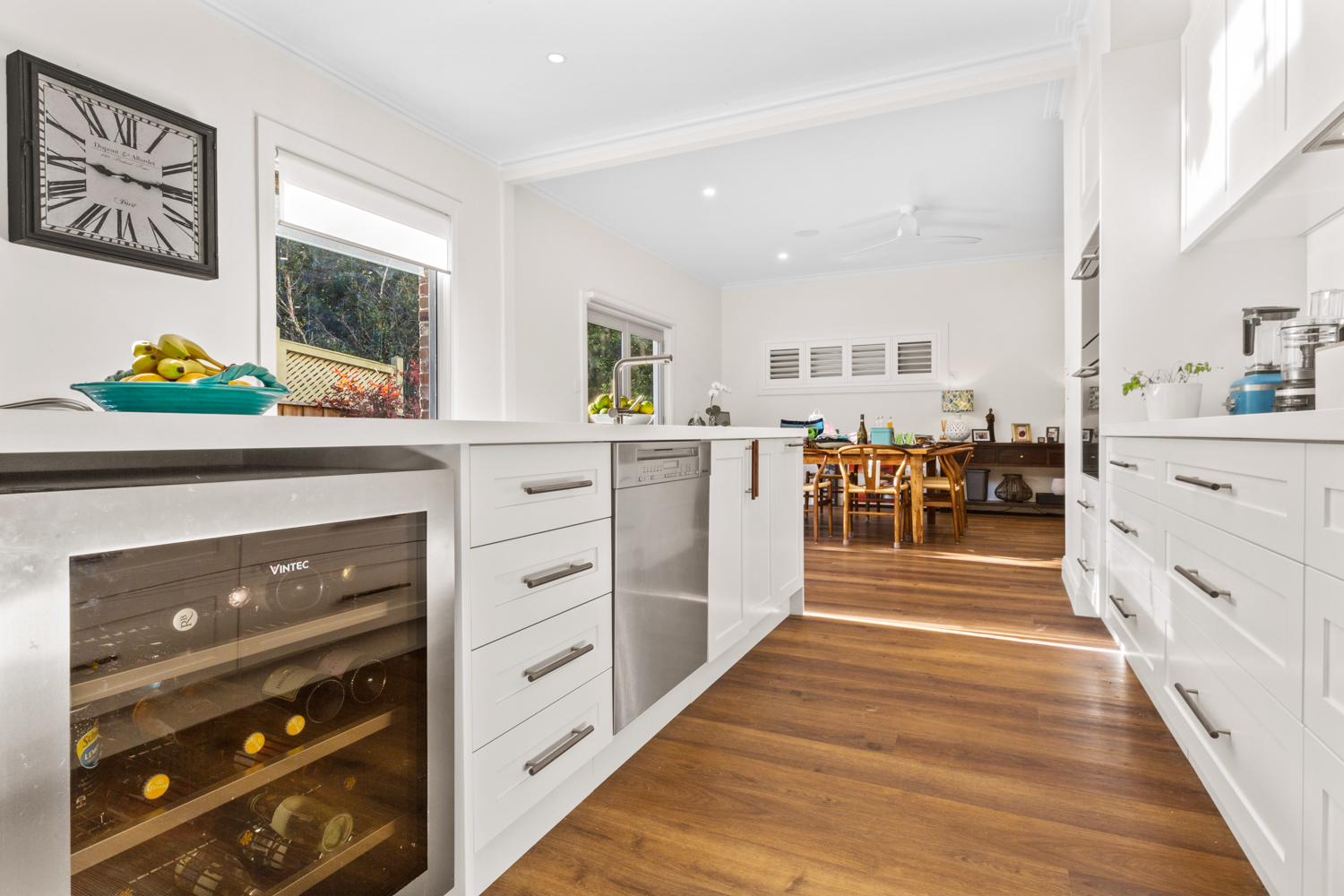
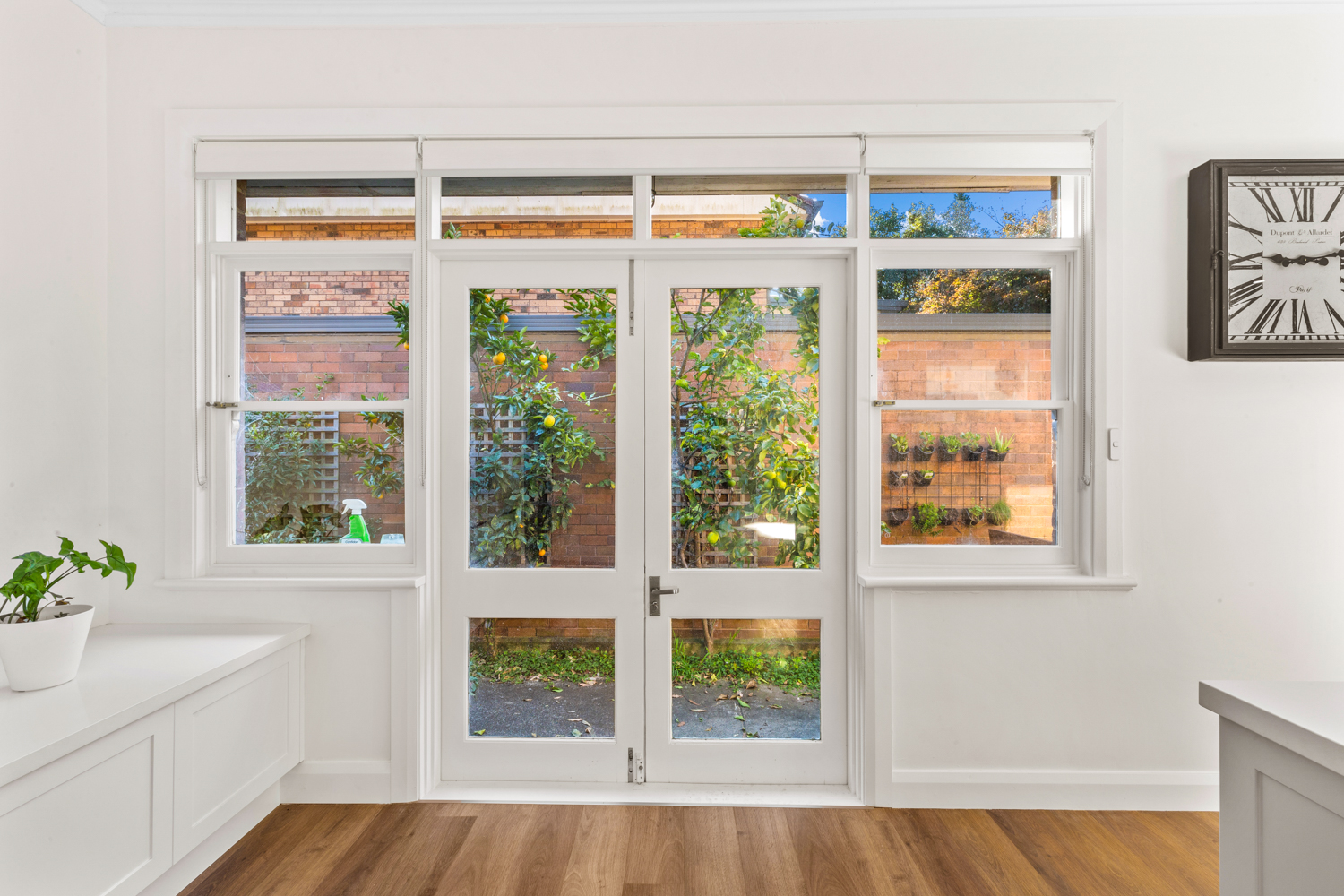
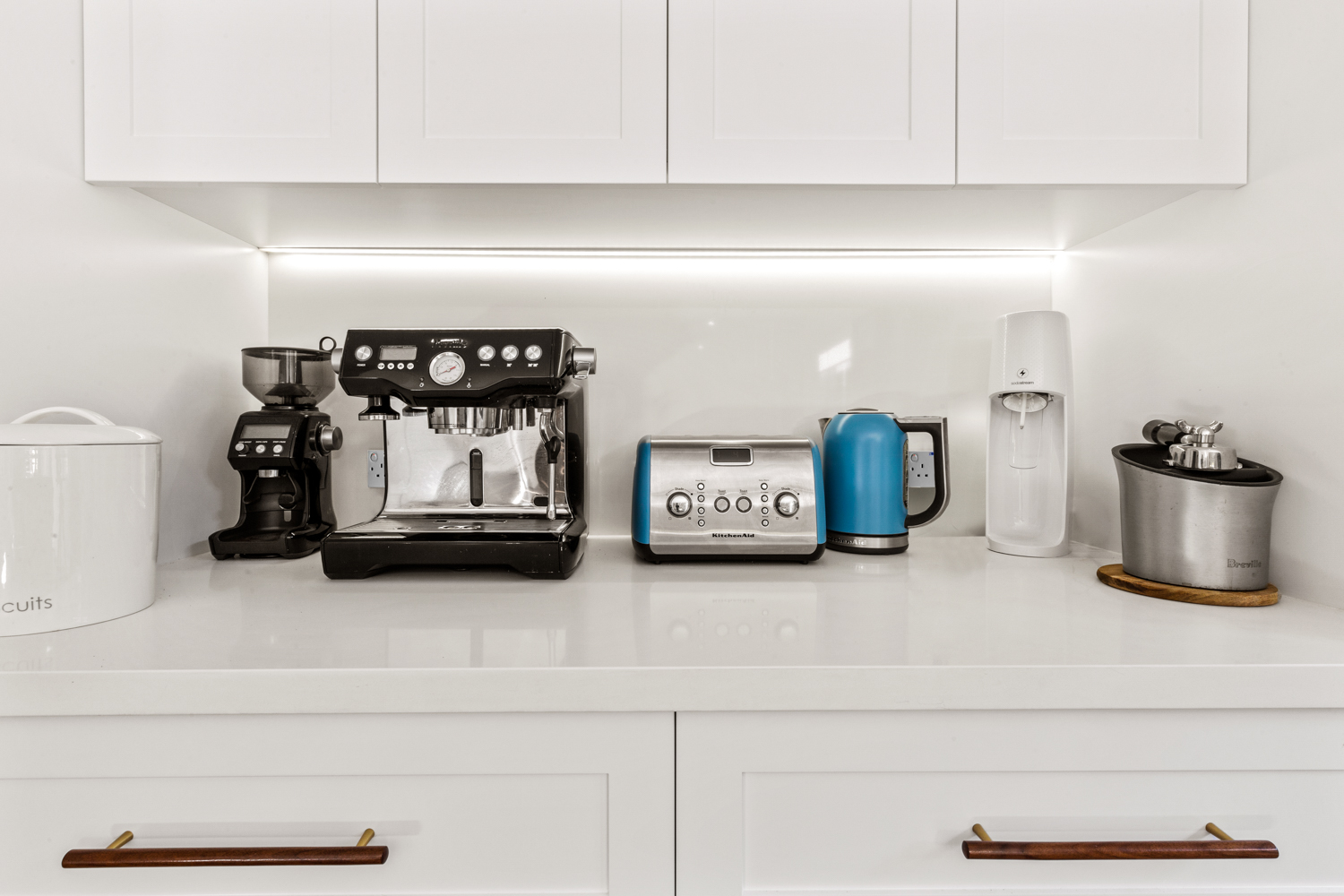
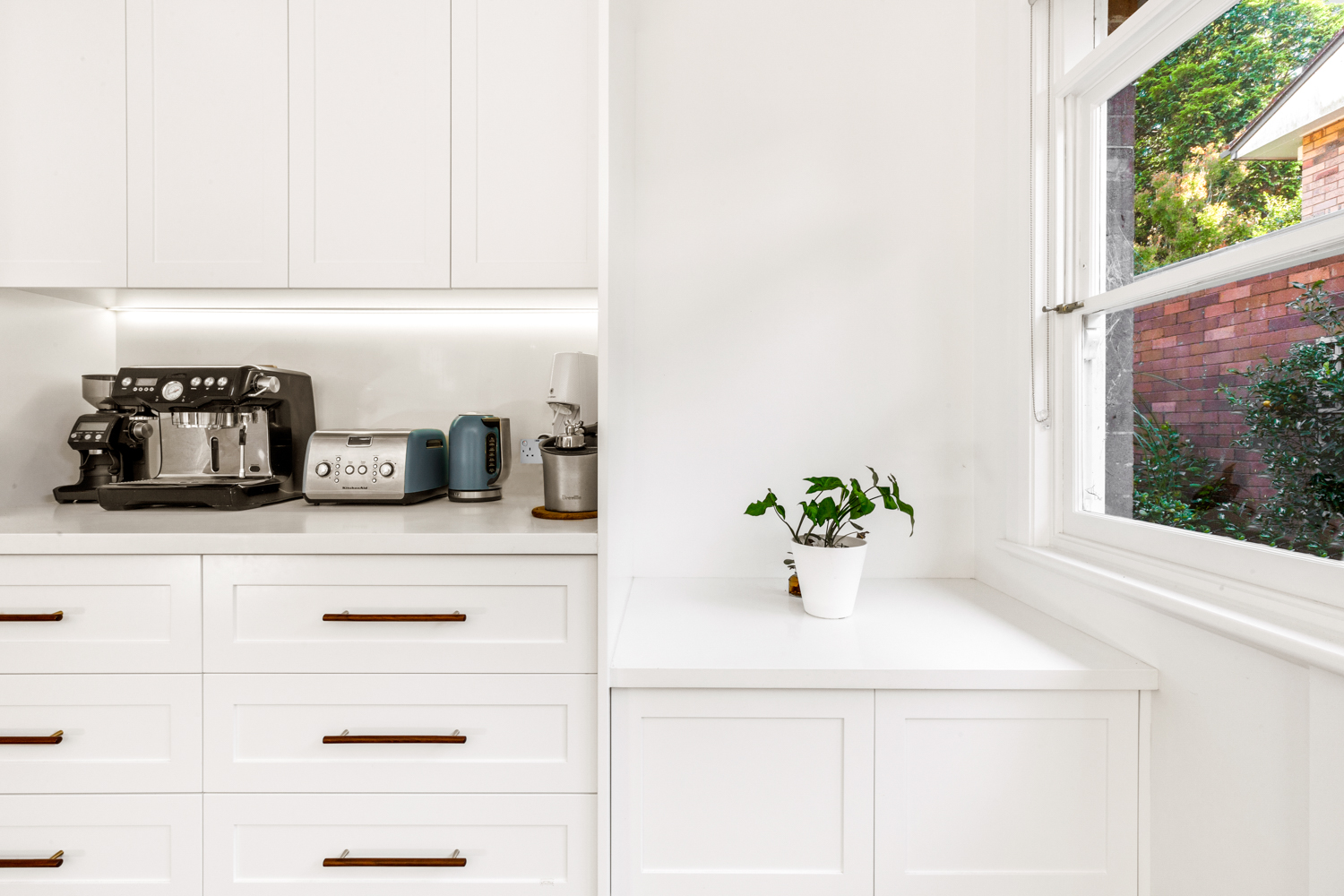
The new Shaker-style kitchen includes an island with breakfast-bar seating. French doors and large windows bring natural light into the kitchen, dining and living areas, while darker flooring runs through the space. A gas fireplace completes the main living room.
These changes gave the owners a more connected everyday living area, with the kitchen forming part of the room rather than being separated from the activity around it.
04 / BUILT FOR THE SITE
Coordinating the BAL-40 construction details
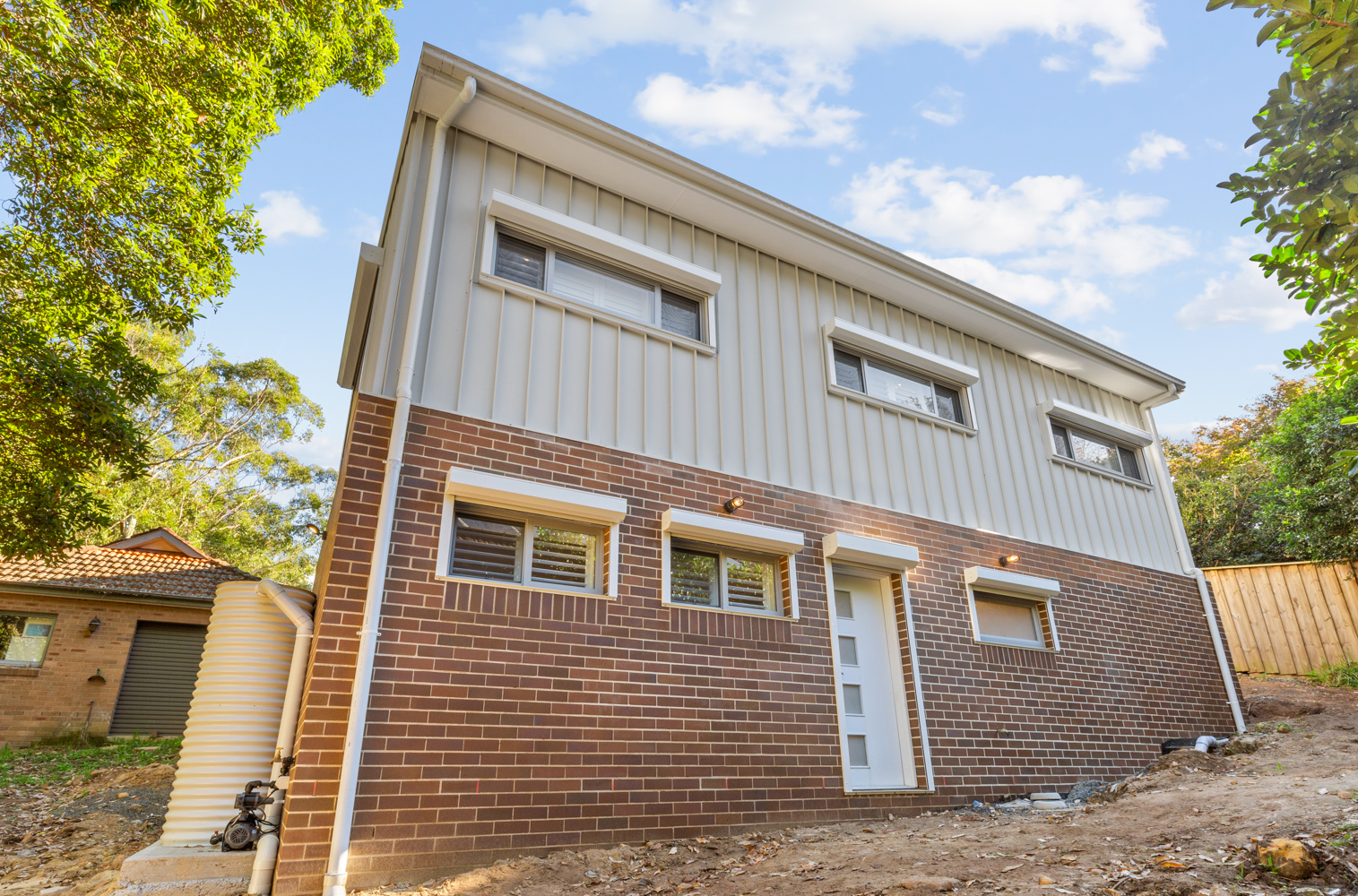
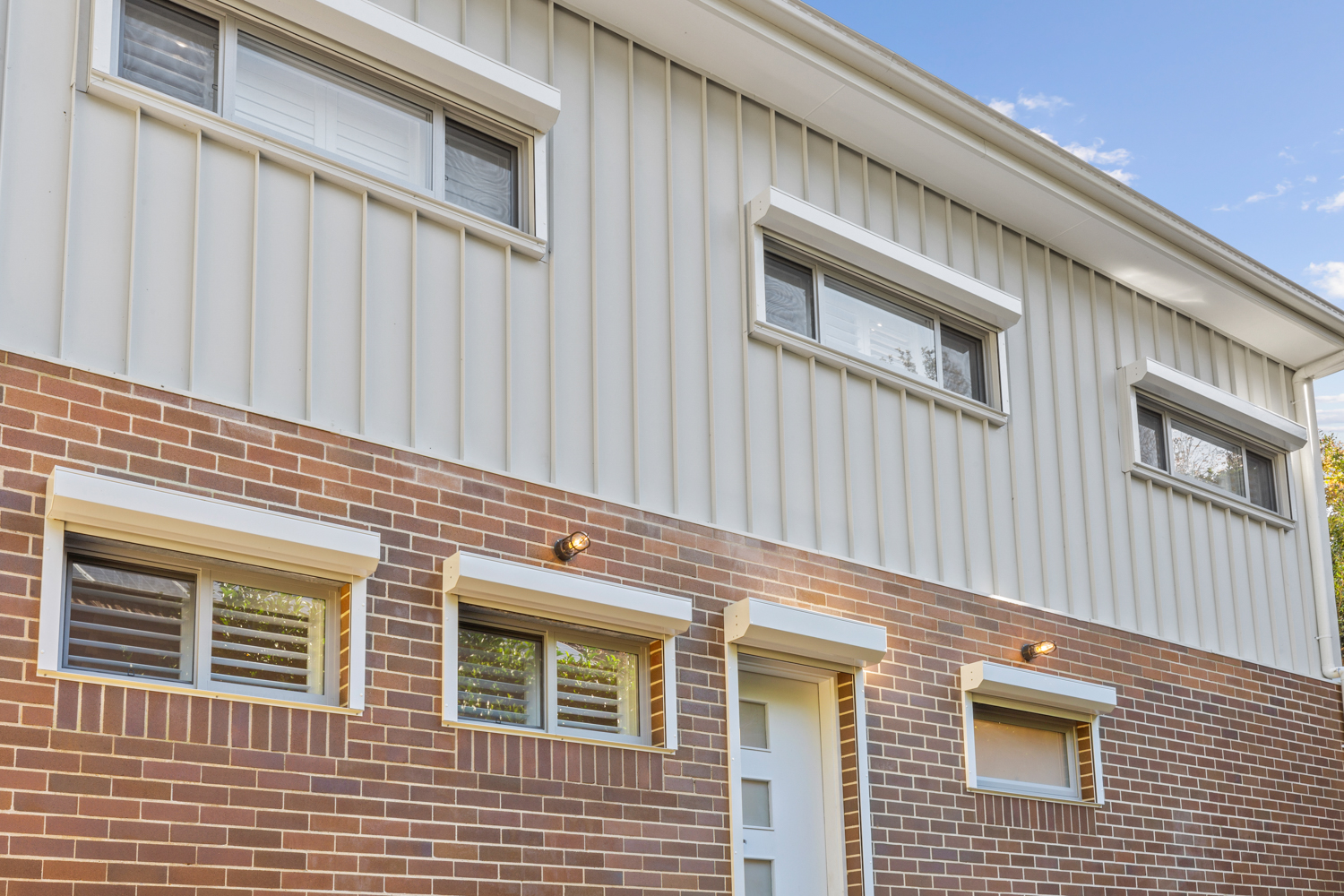
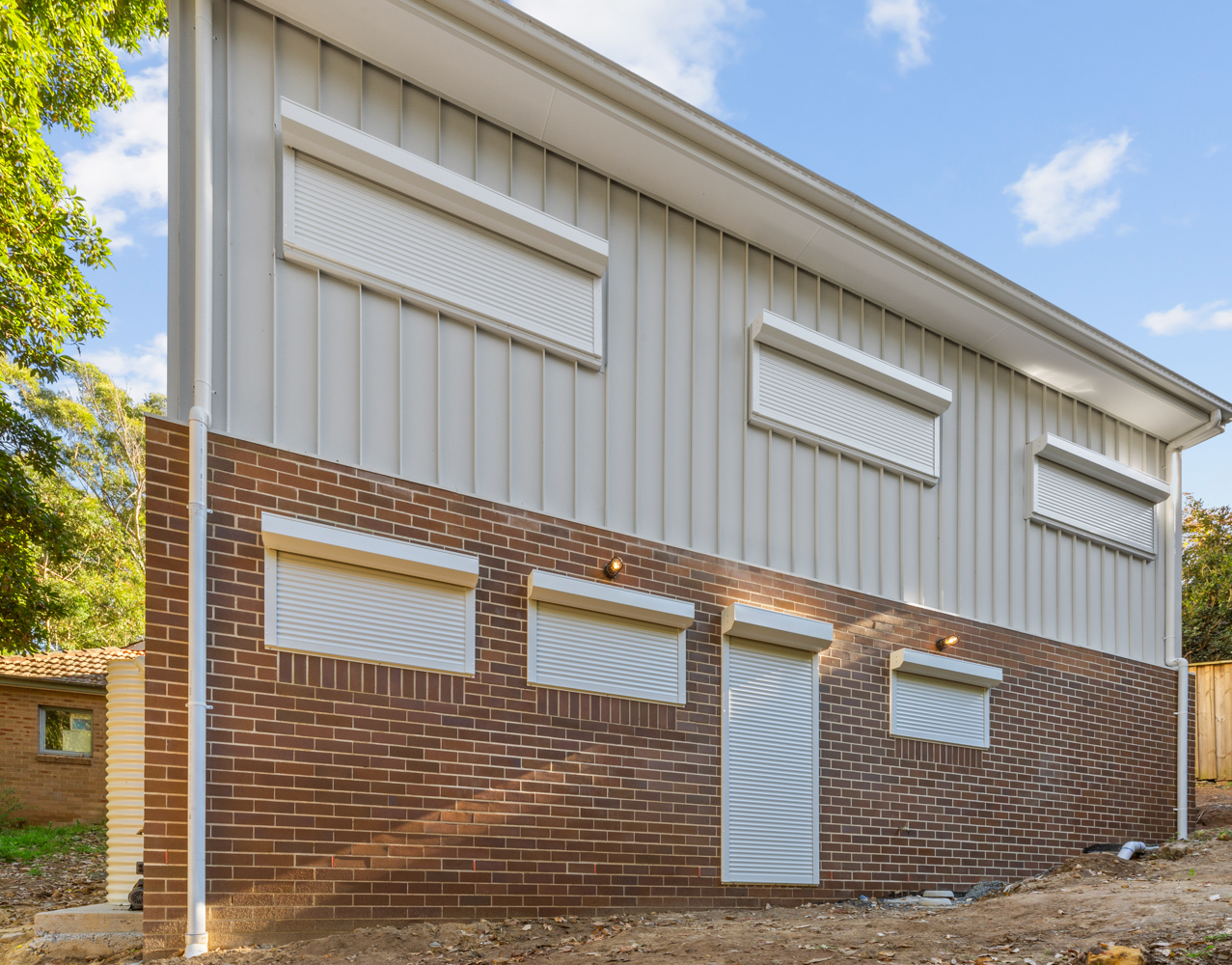
The site’s BAL-40 classification was an important part of the project. The extension included metal external cladding, bushfire shutters and a low-pitched skillion roof, with the external wall, window and roof details needing to be coordinated as part of the project documentation.
Bushfire construction is specific to the site, design and approved system. This completed home’s details should not be treated as a specification for another property. Our guide to building in bushfire-prone areas explains the different BAL levels and the questions to raise when planning your own project.
The result: more usable space, upstairs and down
The completed two-storey extension brought the rear of the home back into daily use. Upstairs, the owners gained a larger open-plan kitchen, dining and living area. Downstairs, new internal access connected the retreat, bathroom, laundry and office, with the rear deck providing an outdoor space alongside them.
For homeowners considering an extension on a sloping block, this project shows the value of coordinating access, ground conditions, documentation and construction as one connected process.
YOUR HOME, NEXT?
Could your home make more of its space?
Tell Scott what you would like to change and whether you already have plans.
Planning a two-storey extension or a renovation on a sloping block?
Tell Scott what you want to change, how your block slopes and whether you already have drawings. We can discuss access, the existing home, the scope of work and the next steps towards a buildable project.
Explore our home extension services, home renovations and builder-led design and documentation services. Our pricing guide explains early budget estimates, detailed quotations and why unknown site conditions need to be considered.
For another example of connecting complex floor levels, see our Architectural Addition & Complete Home Renovation. Our Flame Zone extension case study covers a different bushfire classification.
This project was built in Beecroft. Visit our Beecroft building services or check the areas we service to discuss a similar project in your suburb.
Tell Scott what you have in mind.
Start with your suburb, the work you are considering and whether you already have plans. Scott brings 20 years of building experience and will discuss a suitable next step with you.
You can share plans and photographs after we make contact. The current enquiry form does not upload files.