A HOME SHAPED BY THE HILLSIDE
Flame Zone Home Extension
A new master suite, a connected downstairs and a sandstone wall worth keeping. See how Elite Additions built this extension into a steep, rocky site.

WATCH THE FINISHED HOME
Take a look inside.
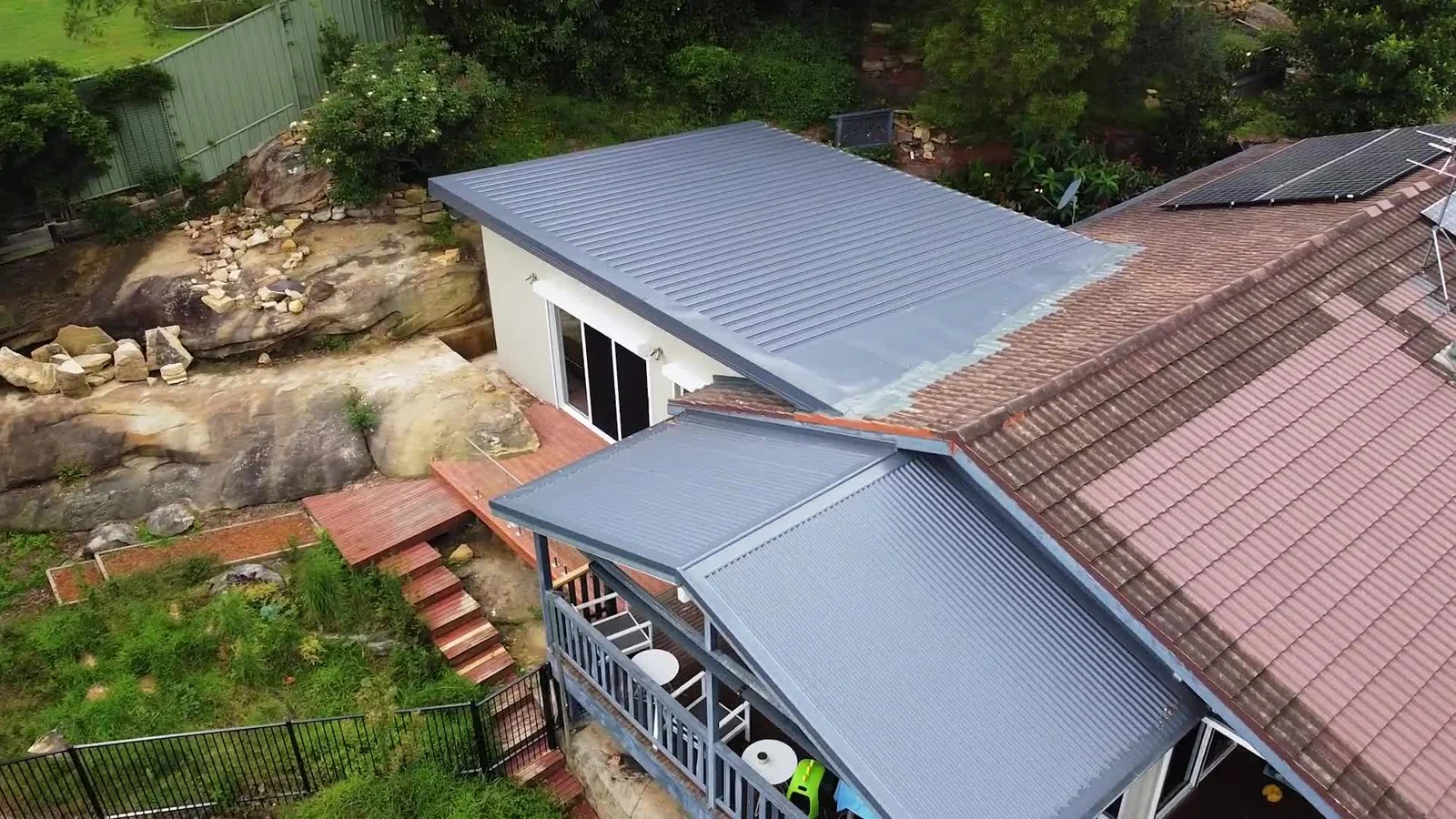
Take a two-minute tour of the finished master suite, ensuite, lower level and deck, with an overhead view of the whole extension.
Behind these finished rooms is a substantial construction story: sandstone excavation, a suspended concrete slab, internal stairs and bushfire protection. Below, the progress photos show how each part came together and why this sloping site needed a carefully planned approach.
THE NEW SPACE
Master suite + ensuite
THE ROCK CUT
Up to 2.5 metres deep
2026 COST GUIDE
01 / THE BRIEF
Make the home work
as one.
Chris and Cam wanted a new master suite, a reworked interior and internal stairs. Two existing downstairs bedrooms could only be reached by going outside. The brief was to make those rooms part of the home’s everyday circulation while adding a bedroom, walk-behind wardrobe and ensuite.
The timing of the internal work mattered, too. Their original brief allowed an initial period away from the house, with the intention of living there through the remaining construction. Chris later confirmed that finishing the stairwell on time allowed them to move back as planned.
Building designer: Rob Crump Design
Structural engineering: Phil Henry
Builder: Elite Additions
02 / MAKING ROOM IN THE ROCK
Cut into the hillside.
Keep its character.
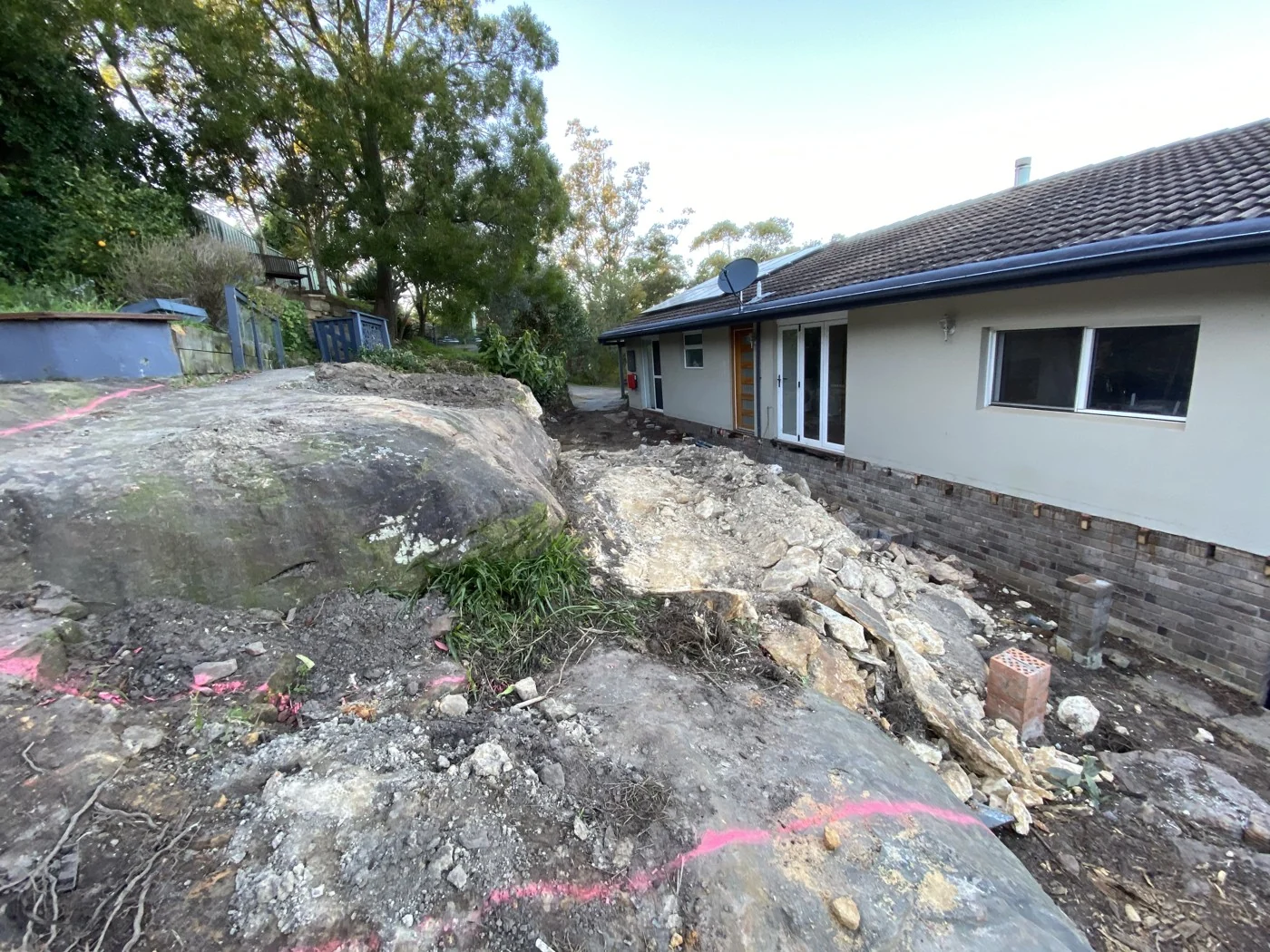
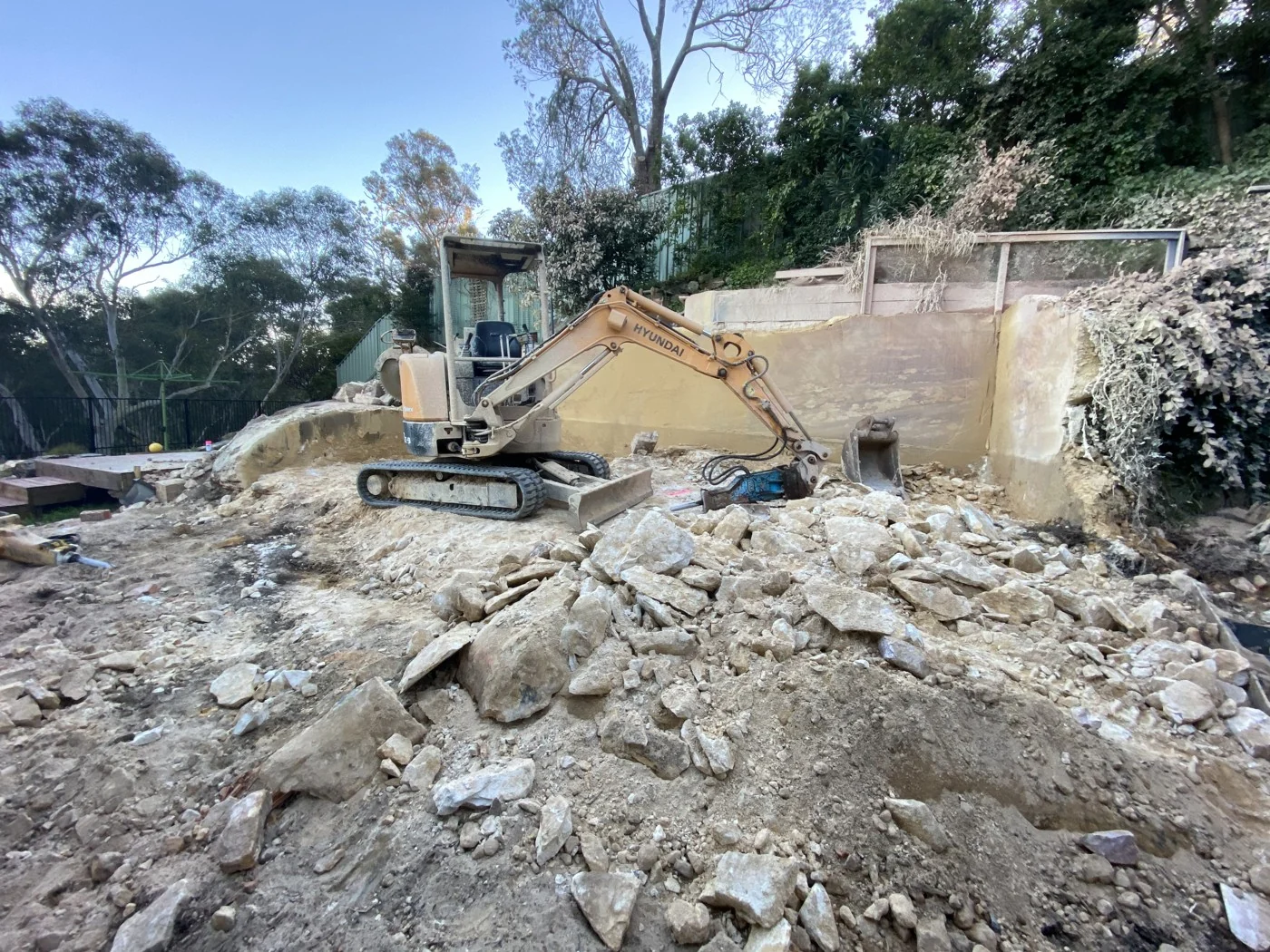
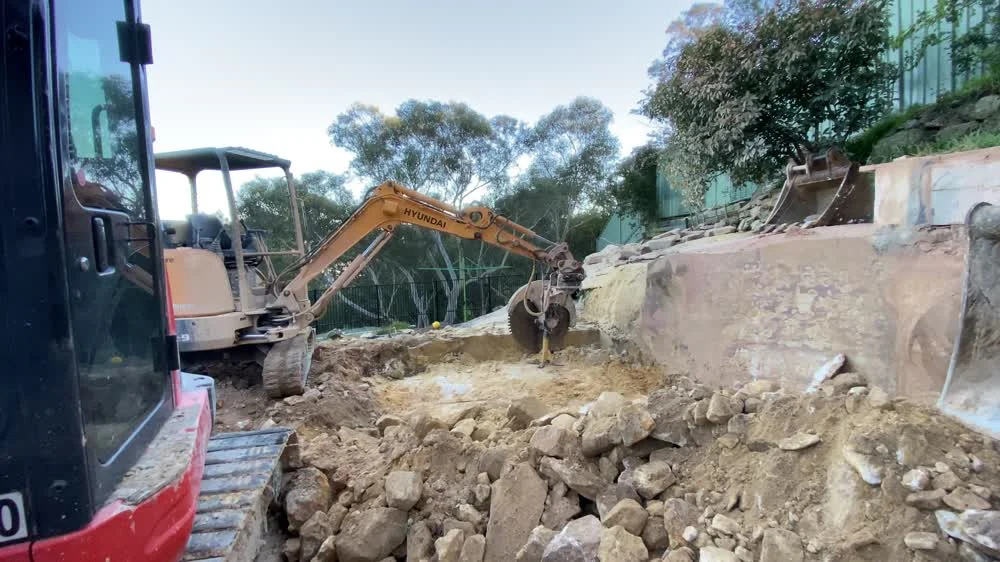
The extension required excavation roughly 2.5 metres into sandstone at one end. Getting equipment to that rock was the first challenge: a steep, winding driveway restricted machine size and made truck movements and rock handling difficult.
Elite first used a smaller machine with a rock breaker to open a path. Once it had created enough access, a larger excavator could move in and work through the sandstone.
For a site like this, the excavation budget needs to account for more than the amount of rock removed. Machine access, breaking and cutting the sandstone, loading trucks and working along the driveway all affect the time and equipment involved.
A deliberate finish,
not just an excavation.
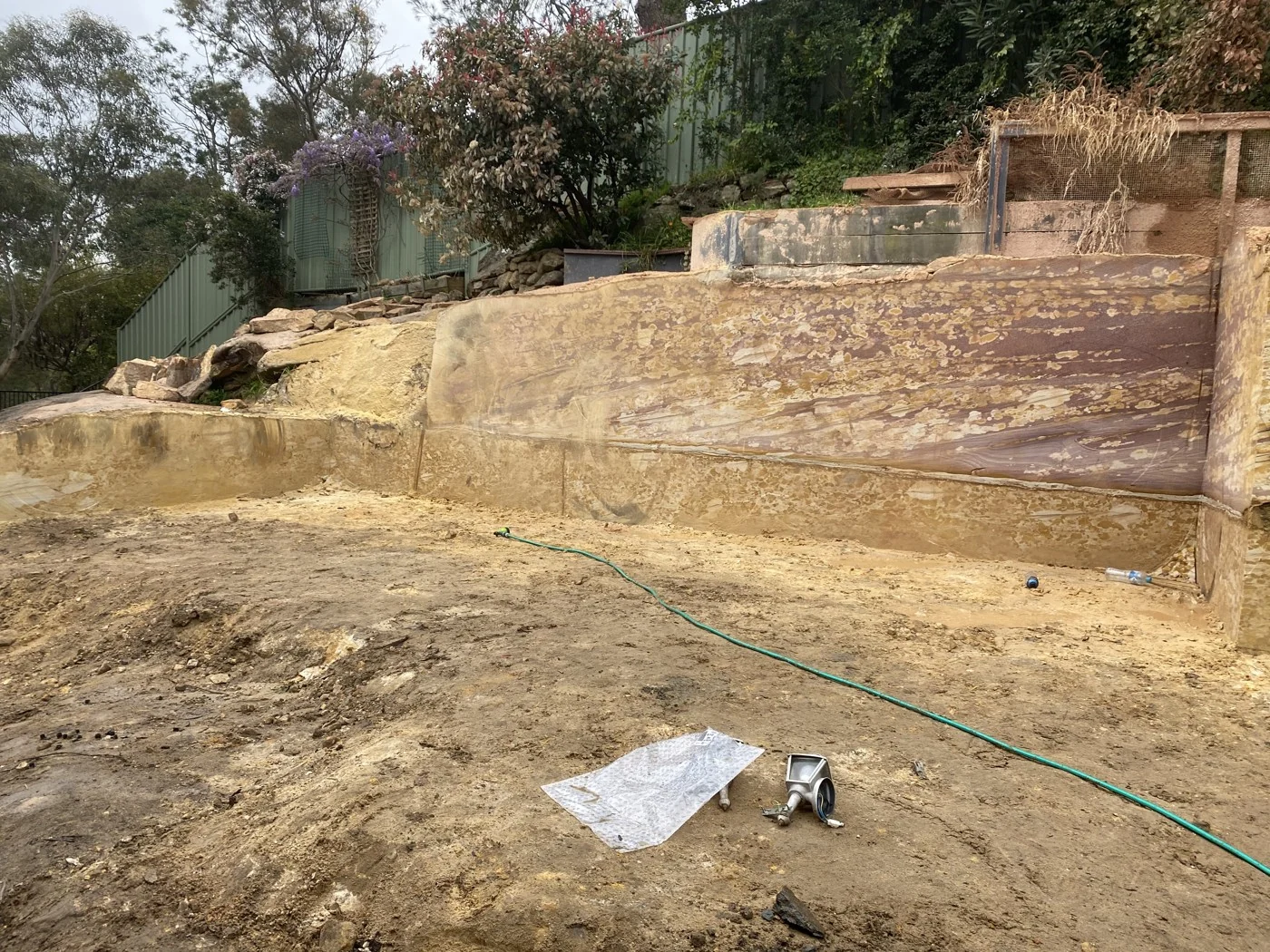
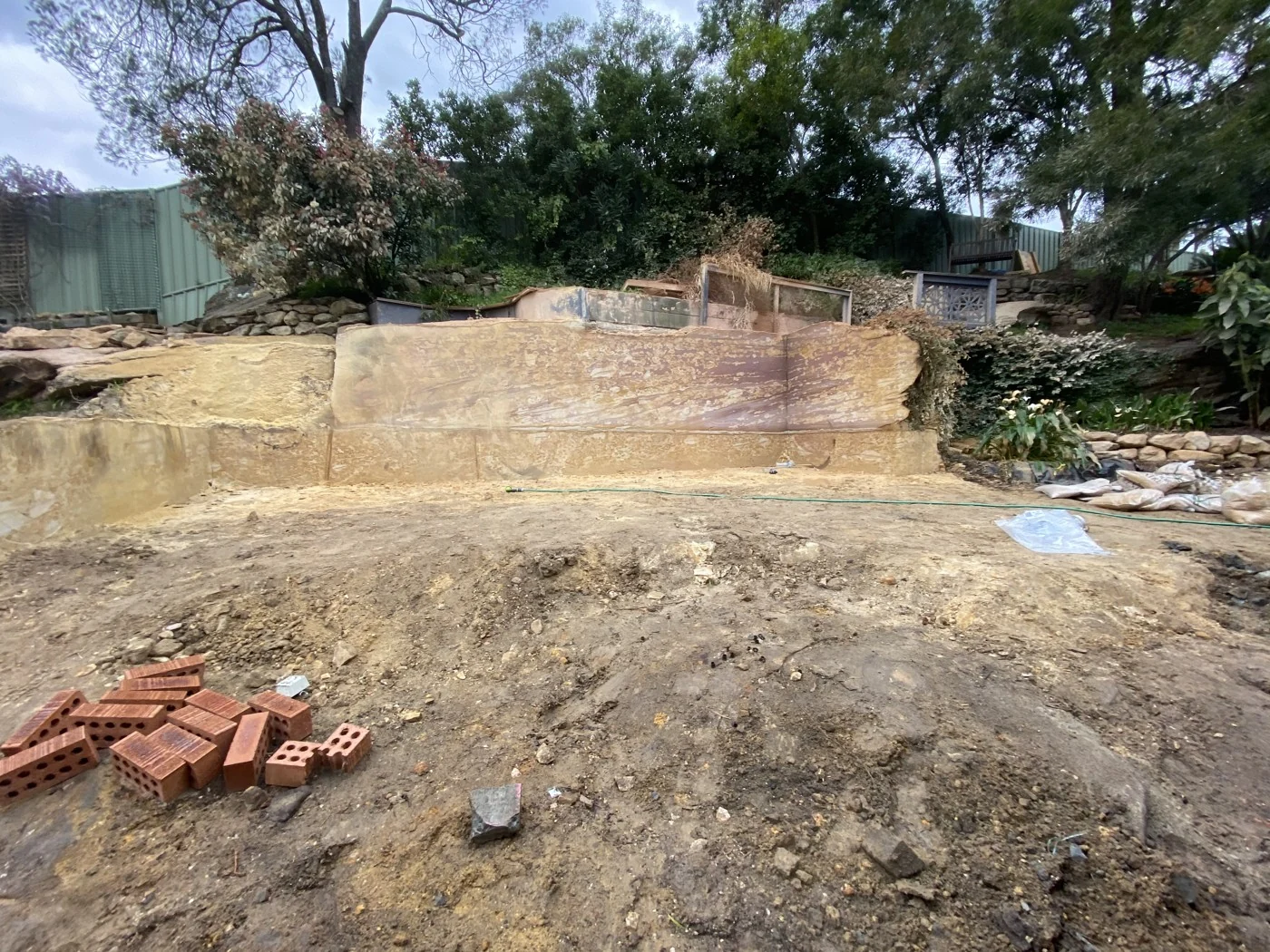
The rock could have been broken out with a machine-mounted hammer, but that would have left a jagged face and visible hammer marks. Elite used the large cutting blade to create a more even exposed surface.
That choice revealed the sandstone’s layers and natural colours. The wall was left visible around the back of the extension, where it became a permanent feature of the home.
03 / SPANNING THE SLOPE
Deep excavation.
A suspended slab.
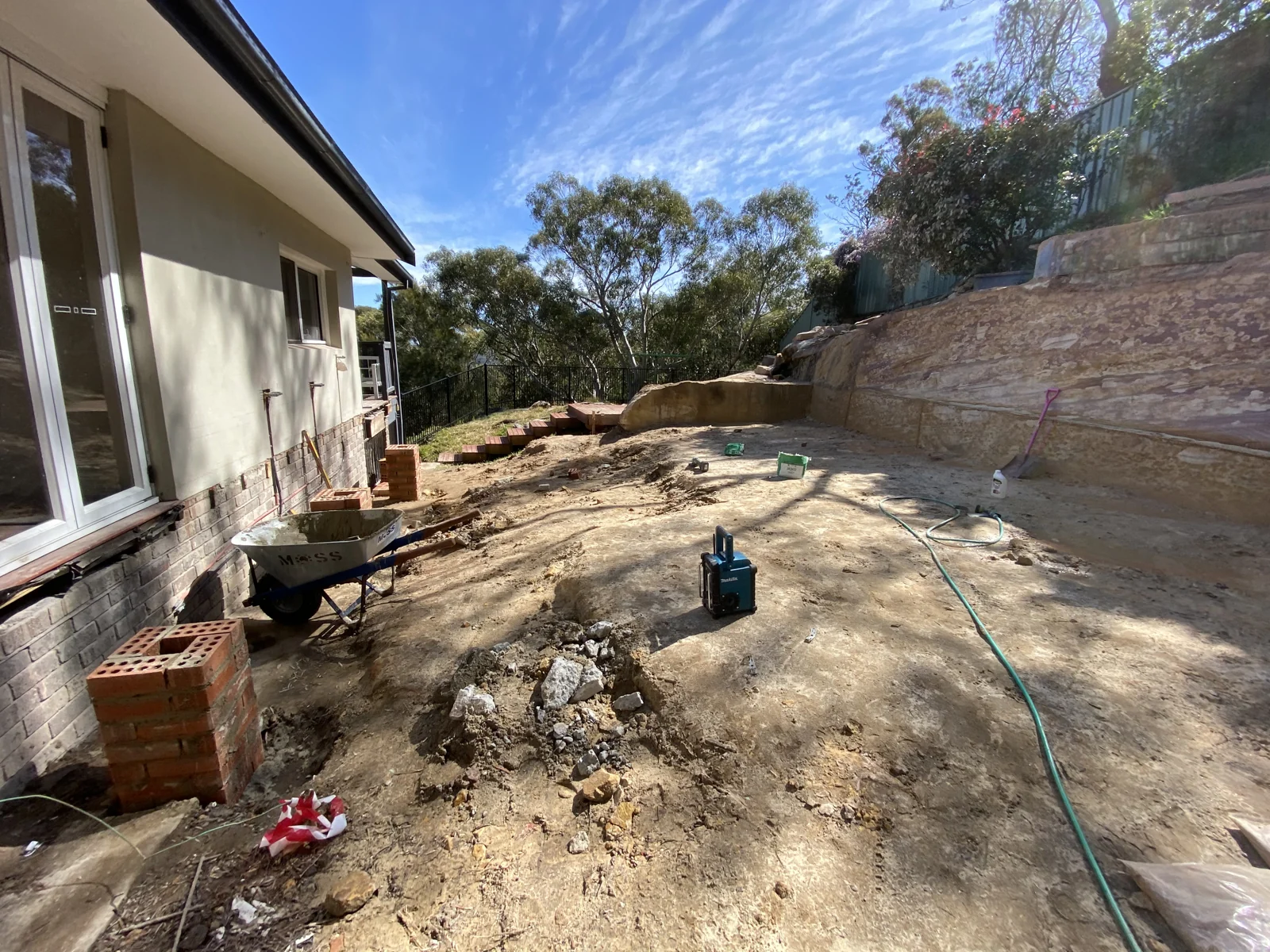
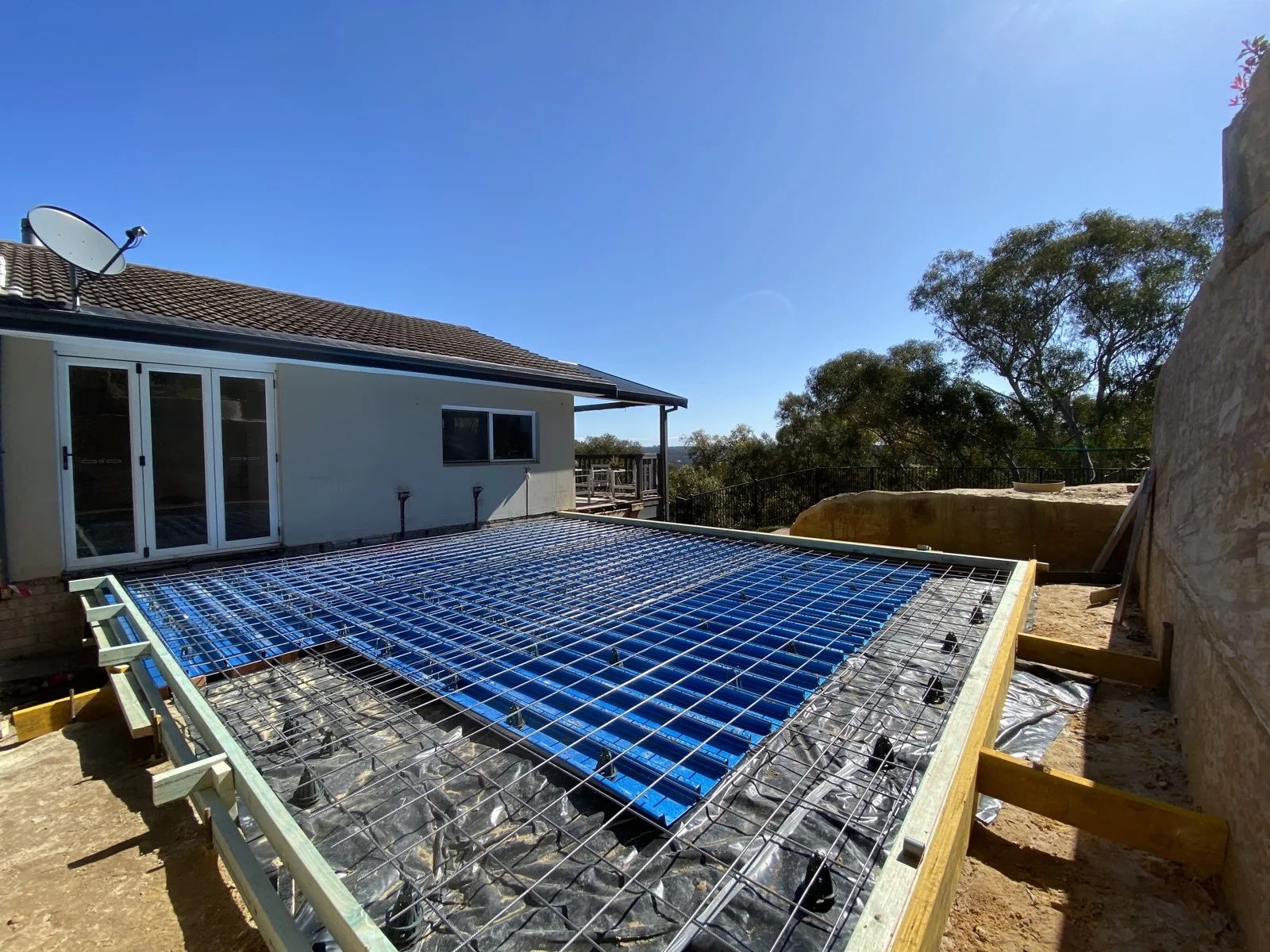
The excavation reached roughly 2.5 metres into sandstone at one end. At the other, the ground fell away. Brick piers brought the support up to the new floor level, with Bondek steel decking spanning from the rock across the piers beneath the concrete slab.
That is why this was a suspended slab even after so much rock had been removed. The structure had to bridge the slope and give the new bedroom one consistent floor level.
For budgeting, the concrete itself is only one component. Preparation, steel decking, reinforcement, pumping, supporting piers and the work needed to reach the site all affect the finished floor cost.
04 / CONNECTING THE LEVELS
An internal stair.
A connected home.
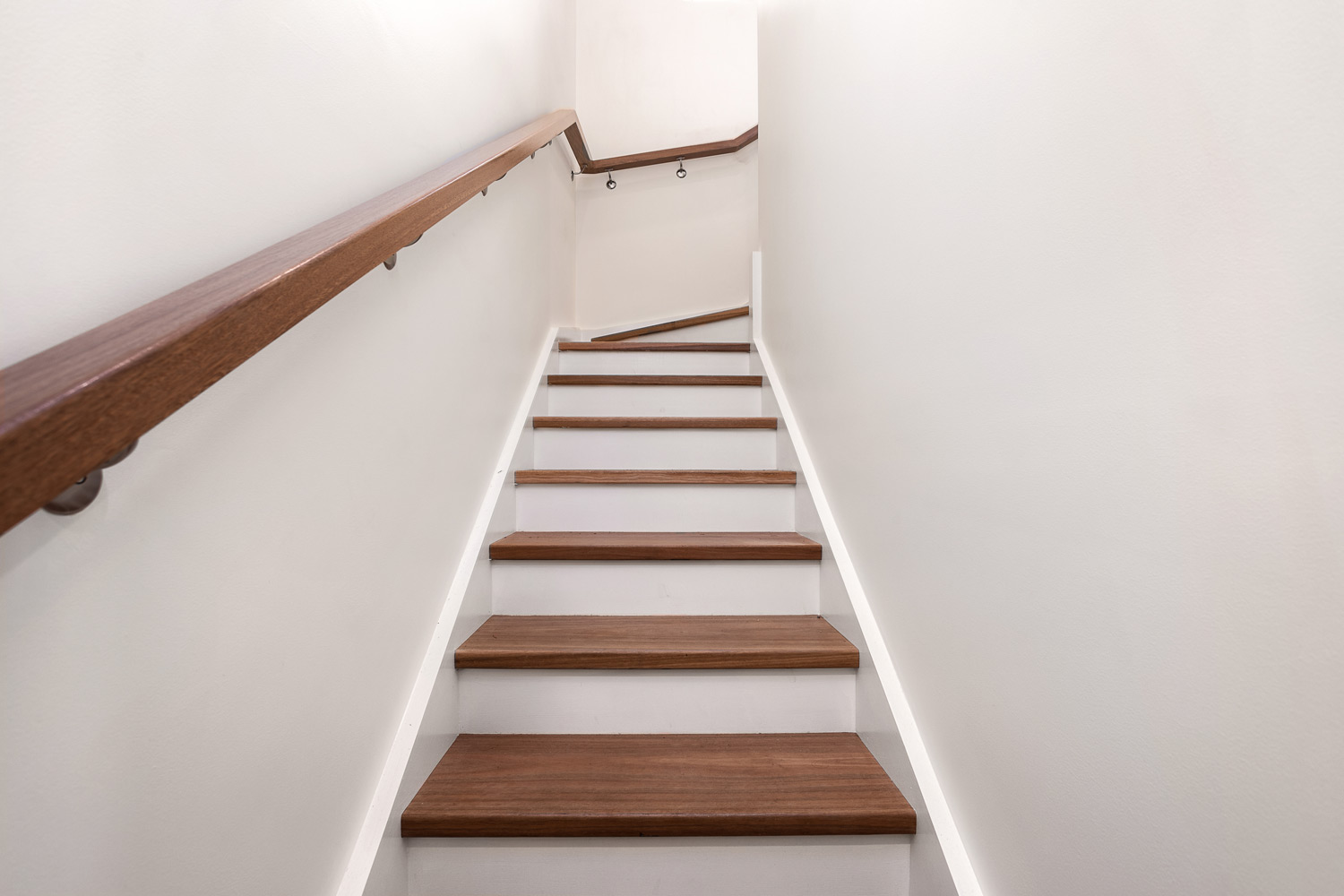
Two existing downstairs bedrooms could only be reached from outside. A new internal staircase would bring them into the everyday life of the house, with a laundry at the bottom.
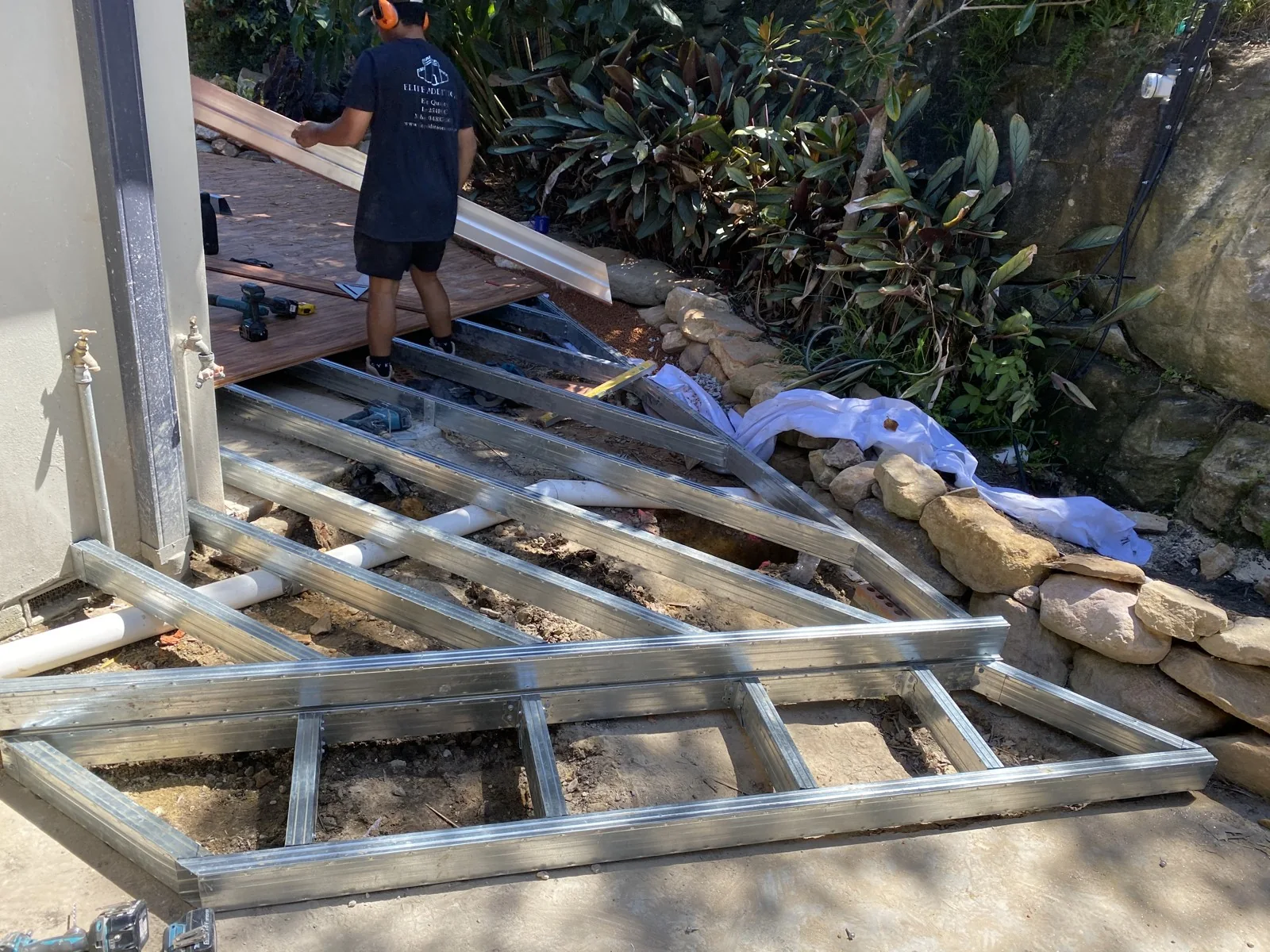
A small upstairs bedroom provided the stair position. Structural framing supported the retained half of its floor so the other half could be opened for the stairs.
Before the staircase could be built, sandstone had to be removed beneath the existing floor. There was no room for excavation machinery. Two people spent about two weeks jackhammering sandstone and carrying it out in buckets. The broken rock could stay on site. This hand excavation was a separate challenge from the machine work beside the extension.
The stairs were ready in time for the family to move back as planned. That connection changed how the whole home could be used.
05 / THE FINISHED SPACES
A new master suite,
with room to unwind.
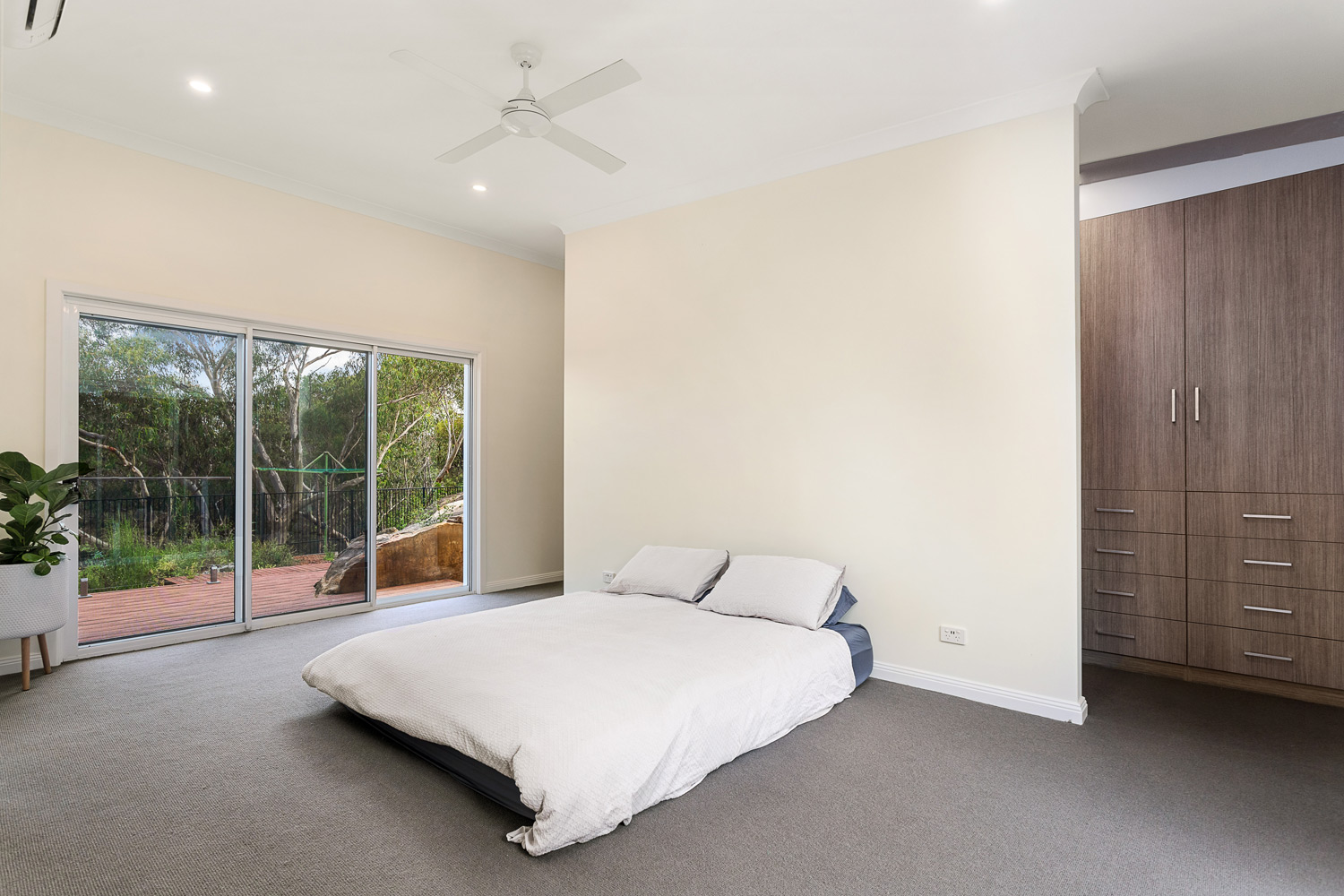
A partition behind the bed leads to a walk-behind wardrobe across the full back of the room. An opening roughly one metre wide on each side keeps the bedroom open while providing a separate dressing area.
The new ensuite completes the suite. Together, these rooms create a more private part of the home while the internal staircase improves access to the existing bedrooms below.
It is a useful distinction when planning an extension: adding floor area and improving the way the existing rooms connect can be considered together.
An ensuite designed
as part of the suite.
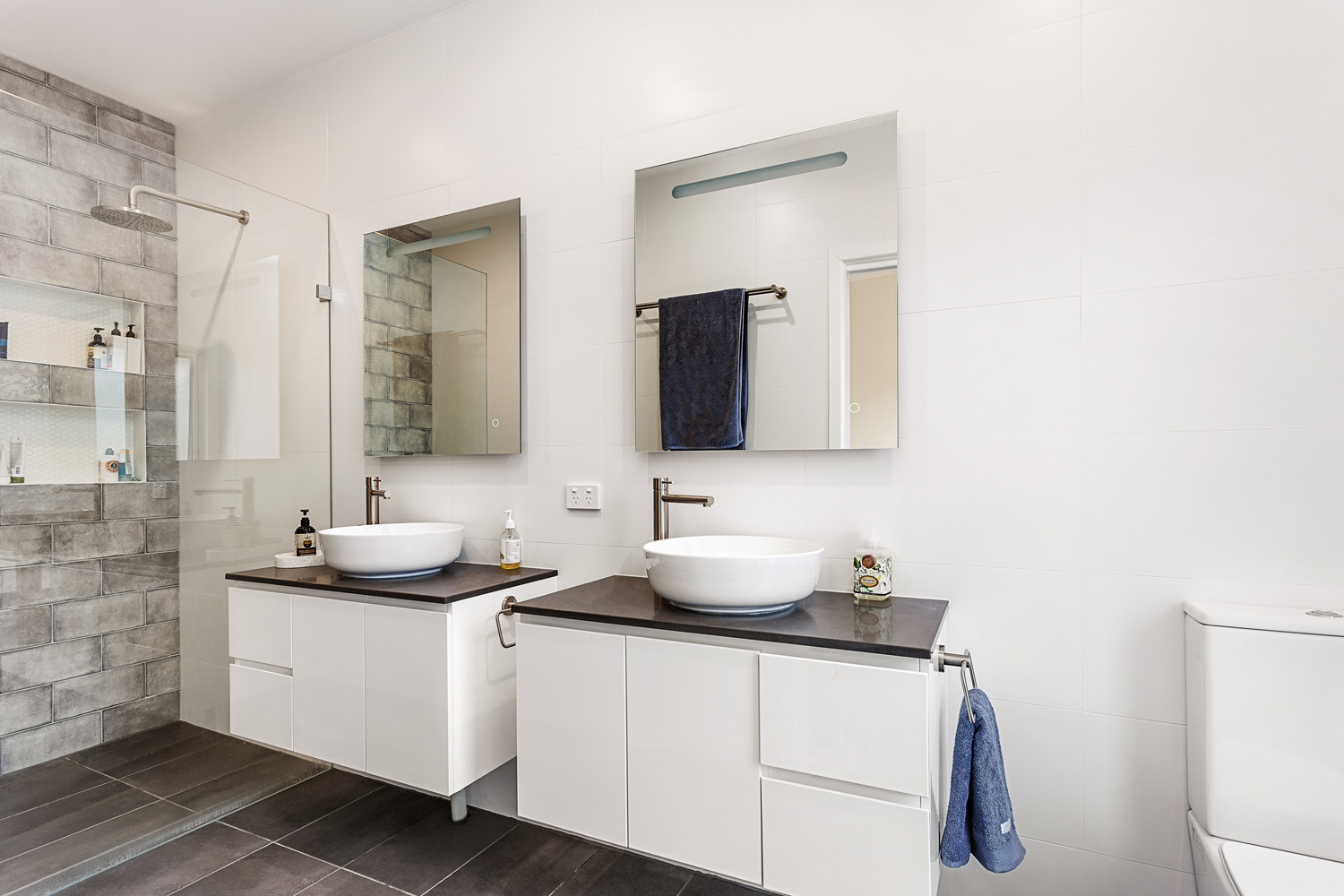
Twin basins, wall-hung vanities and a tiled shower give the ensuite a clear, practical layout. The finishes belong to the same completed master-suite story as the bedroom beside it.
A bathroom budget needs to bring together plumbing, waterproofing, tiling, fittings, cabinetry, glass and electrical work. A vanity price on its own tells very little about the cost of a finished ensuite.
For a comparable project, we discuss the fittings and finish selections alongside the building work so the allowance reflects the room you actually want.

Space outside,
shaped around the rock.
The deck connects the new and existing parts of the house with the garden. Its edge follows the sandstone, keeping the natural setting close to the finished rooms. The extension’s external walls were clad in Hebel panels and rendered with a texture to match the existing home.
The exposed wall behind the extension is another reminder of the site. Choosing a saw-cut finish revealed the stone’s layers and colours, turning an excavation face into a feature that can be seen as you walk around the home.
Framing, decking, balustrades and access all contribute to an outdoor-area budget. On a steep site, the support beneath the boards matters as much as the surface finish.
06 / BUILDING IN A BUSHFIRE SETTING
The roof, windows
and shutters work together.
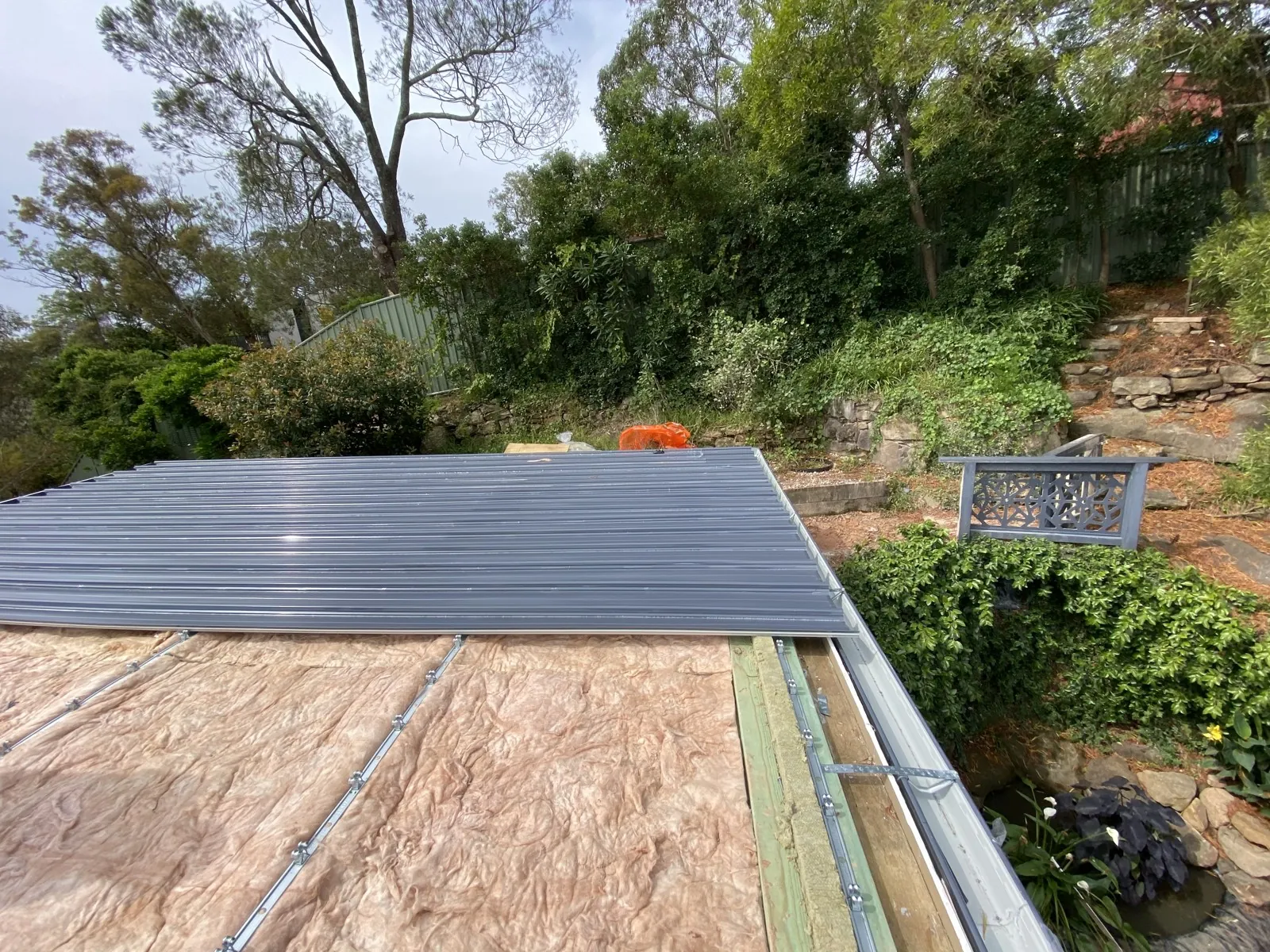
The project’s bushfire statement records BAL-FZ requirements for the north, west and south new construction and roof, with BAL-40 on the east. The solution was specific to those approved details.
Project records identify a TBA Firefly system across the new roof and specialist bushfire shutters supplied and installed by MB Restorations. We used Trend windows and doors with separate Flame Zone shutters. During quoting, we also considered specialist Flame Zone glazing. Cost and supply lead times influenced that choice. See Trend’s current bushfire ratings.
For a new build, a fire-blanket material price is only a starting point. The specified system, roof area, junctions, fixings, installation and supporting documentation all need to be included. Shutter prices also depend on the assessed protection, opening sizes and installation requirements.
07 / THE 2026 COST GUIDE
What does an extension
like this cost today?
On a steep sandstone site, the budget starts long before the finishes. Access, excavation, the suspended slab and bushfire protection all shape the cost.
These indicative 2026 allowances show some of the main parts of a similar build. All figures are in Australian dollars, including GST.
2026 indicative allowances
AUD incl. GST · Selected parts of the build
Sandstone excavation
$50,000
Machine access, rock breaking, saw cutting and spoil handling. Hand excavation beneath the existing house is allowed for separately.
Formwork and concreting
$20,000
Suspended-slab preparation, Bondek, reinforcement, pumping and pour labour. Confirm complete concrete supply, supporting piers and additional site labour separately.
Trend window supply
$18,000
Windows and glazed doors, with installation and bushfire shutters priced separately. Sizes, frames and glazing follow the project specification. Explore Trend bushfire options.
Electrical work
$15,000
Lighting, power points, selected fittings and circuits for the extension. Switchboard changes and final fitting selections are checked against the plans.
Painting
$25,000
Preparation and painting of the new work, plus agreed areas of the existing home. Access, surface condition and the selected finishes affect the final scope.
Bushfire shutters
$25,000
Supply and installation of the specified shutters over the glazed openings. Sizes, controls and fixings are coordinated with the approved bushfire design.
TBA Firefly roof protection
The specified blanket system, fixings, laps, junction details and installation are priced to suit the roof design.
Quote to suit
Planning a similar extension?
These are selected trade allowances, not a complete extension price. The full budget also needs structural framing, remaining site labour, the internal stairs, plumbing, ensuite and laundry fit-out, linings, roofing, decking and selected finishes.
Send Scott your plans, site photos and a brief description of the rooms you want. We can work through the complete scope and budget with you.
Guide reviewed October 2026. Indicative allowances for the scope described; your final price depends on the plans, site conditions, selections and agreed inclusions.
IN THE HOMEOWNER'S WORDS
“Three things impressed me - the dedication to the best possible result, the quality of the trades that work with you and a willingness to listen.”
Chris · Homeowner
Questions about a similar project?
Can a home extension be built into sandstone?
This project shows one approach to a difficult site: a smaller machine first opened access, a larger excavator cut the sandstone, and a suspended slab bridged the changing ground levels. Your design needs its own site investigation and structural assessment.
Why use a rock saw instead of a breaker?
Here, the saw was chosen to leave a more even exposed face with fewer hammer marks. The sandstone remained visible around the extension, so its finish became part of the home rather than being hidden.
Is this cost guide a quote for my extension?
No. The figures are indicative 2026 allowances, including GST, for selected parts of a similar build. Firefly roof protection is quoted to suit the roof design. Your final price depends on the drawings, ground conditions, access, specified bushfire systems, finishes and agreed inclusions. The guide is not a complete project price.
Does a flame-zone project need the same system everywhere?
The historical statement for this project specified BAL-FZ for the north, west and south new construction and roof, and BAL-40 on the east. Any new project needs its own assessment and issued design. Do not use this case study as a specification for another site.
Do BAL-40 windows meet Flame Zone requirements on their own?
A BAL-40 rating alone does not establish suitability for BAL-FZ. Trend lists selected windows and doors up to BAL-40, with product-specific glazing, seals, screens and hardware. For Flame Zone work, the complete window or door design and any protective shutters need to match the project's assessed requirements and supporting documentation.
Can Flame Zone windows or doors be used without shutters?
Some specialist systems can, within their tested configurations, sizes and installation details. For example, Paarhammer describes BAL-FZ options for use without shutters. They are a different specification from a BAL-40 window. On this project, we considered specialist Flame Zone glazing during quoting, but its higher price and overseas supply concerns in 2020 favoured the shutter option. A new project needs a fresh comparison.
Why was the slab suspended after so much rock was excavated?
The site sloped sharply. At one end we cut roughly 2.5 metres into sandstone; at the other, the ground fell away. Brick piers supported the lower side, with Bondek steel decking spanning between supports beneath the concrete slab. The engineered structure created one floor level across those changing ground conditions.
What should a Firefly roof-protection quote include?
Start with the specified roof system and roof area, then include the required blanket, fixings, laps, junctions, penetrations and installation. A blanket supply price alone does not cover the finished system. TBA Firefly provides system information and a tailored roof-quote enquiry; we coordinate the resulting scope with the rest of the building work.
Can I enquire before I have plans?
Yes. Choose the design pathway in the project enquiry and describe the space you need. If you already have plans, choose the existing-plans pathway. Include your suburb, budget expectations and preferred timing so Scott has a useful starting point.
YOUR HOME. YOUR NEXT CHAPTER.
Working with a tricky site?
Let's talk it through.
Tell Scott your suburb, what you want to change and whether you already have plans. You can enquire while you are exploring ideas or when you are ready to build.
Scott will review your details and get back to you about the next step.
Prefer a separate form? Open our contact page.